Location
Mount Vernon, WA 98274
Location
Mount Vernon, WA 98274

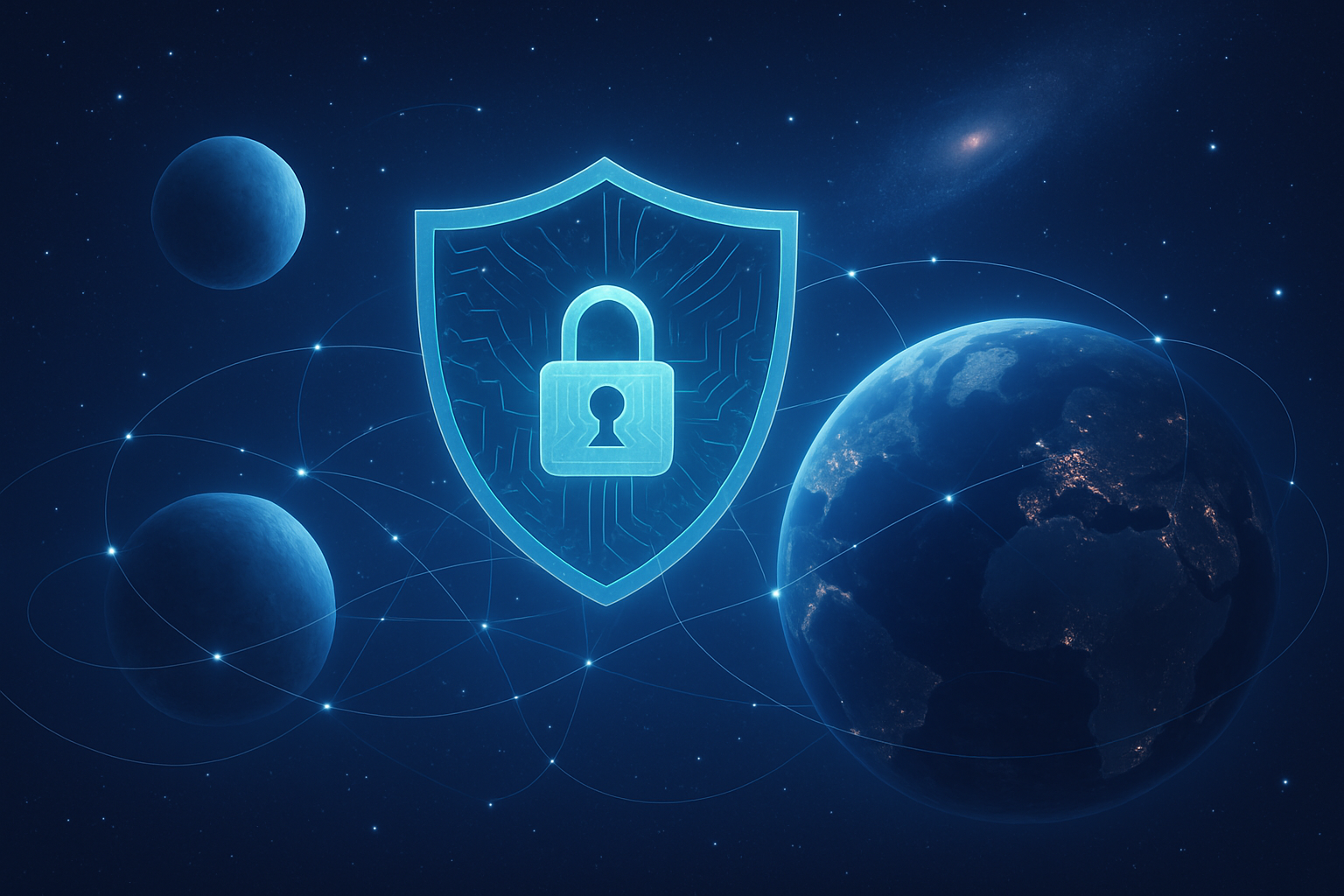
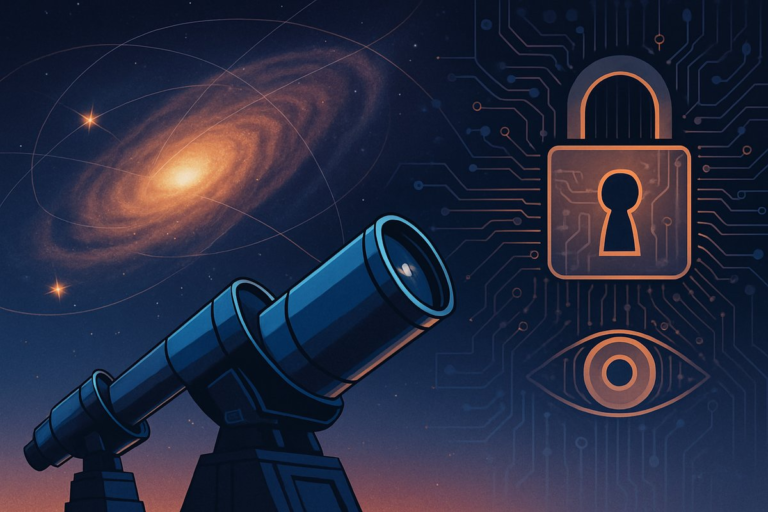
As humanity builds networks that span planets and leverage quantum signals, a new frontier of surveillance is emerging among the stars. Scientists and ethicists are racing to develop cryptographic safeguards and policy frameworks to protect individual and collective privacy in space-time communications.
Across deserts and mountaintops, radio dishes once stood sentinel for faint signals from distant pulsars. Today, those same dishes are the first rung on a ladder to a full-fledged space-time internet-an interconnected web of satellites, lunar relays, and quantum entanglement nodes stretching from Earth to Mars and beyond. But with that promise of near-instant messages and high-definition cosmic weather reports comes a darker possibility: unauthorised eyes and ears eavesdropping on the private lives of explorers, colonists, and researchers scattered throughout the solar system.
Imagine a Martian farming collective sending harvest data back to Earth through an optical link in Mars orbit. Under ideal conditions, quantum key distribution ensures their readings remain confidential. But what if a rival corporation or a rogue state deploys interceptors armed with entangled photon analyzers? The moment a photon leaks, the system’s theoretical security cracks. The collective’s water-usage statistics, soil-nitrate levels and genetic profiles float unprotected through space-time, ripe for industrial espionage or geopolitical leverage.
This is not speculation. In 2021, China’s Micius satellite demonstrated long-distance quantum entanglement and secure key exchange between ground stations. Europe’s Quantum Communication Infrastructure program is mapping an orbital quantum backbone. DARPA’s Blackjack initiative is deploying hundreds of small satellites to test global mesh networks. All sides agree: space is the next domain for both communication triumphs and surveillance escalations.
At the heart of the debate is a paradox unique to space-time networks. On one hand, tying together laser links, microwave uplinks and entanglement channels can reduce single points of failure and make deep-space missions more resilient. On the other, an intercept-capable actor could monitor traffic without leaving footprint on Earth’s legal radar. While maritime or airspace treaties define where a vessel can move, photons don’t respect national borders once they’re in orbit or beyond.
Cosmic Cartography of Data Flows
Satellites already beam terabytes of Earth observation data daily-cloud cover, vegetation indexes, shipping movements. Next-generation sensors will map urban heat islands with centimeter precision, track individual vehicles by their RF signatures, even glimpse the faint biometrics of nocturnal wildlife. As these sensors migrate off-planet-to lunar surface stations, asteroid prospectors and interplanetary probes-they’ll carry the same surveillance potential.
A network linking colonies on Europa, Titan and Mars could resemble today’s cloud services, replicating databases across nodes to ensure accessibility and uptime. But that also multiplies targets for intercept. Each relay becomes a potential wiretap location. The typical Earth-based solution-warrants, oversight boards, multinational treaties-struggles to adapt when the “crime scene” is orbiting Jupiter or drifting through the asteroid belt.
Ethical Engineers and the Quest for Cosmic Privacy
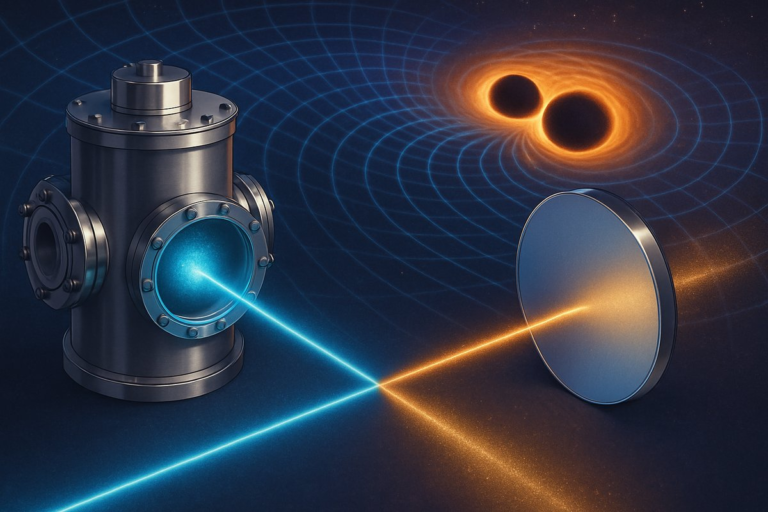
Researchers are already experimenting with quantum secret sharing, where information is split into multiple entangled pieces and only recombines when a quorum of nodes agrees. In theory, eavesdropping on any single channel yields no usable information. Prototypes built in university labs use inexpensive telescopes and single-photon detectors to simulate a lunar relay. The next step: testing these systems under space-like conditions, forging hardware hardened against cosmic radiation and thermal extremes.
But technical solutions alone won’t suffice. Advocates for cosmic digital rights propose a charter-akin to a space-time Magna Carta-that enshrines the right to privacy not only on Earth but anywhere humans set foot or beam a signal. Drafts circulating among policy think tanks call for transparency mandates on encryption backdoors, international monitoring boards for orbital assets, and open registries of quantum repeater deployments.
Republics, alliances, and private consortiums are weighing in. Some emerging spacefaring nations see strong encryption as vital to protect fledgling industries from predation. Others, wary of unregulated channels, push for mandated “cosmic network policing”-satellites equipped with AI-driven anomaly detection that flag suspicious encryption patterns. Skeptics warn this could become a trojan horse for mass surveillance under the guise of security.
Citizen Scientists and Distributed Defense
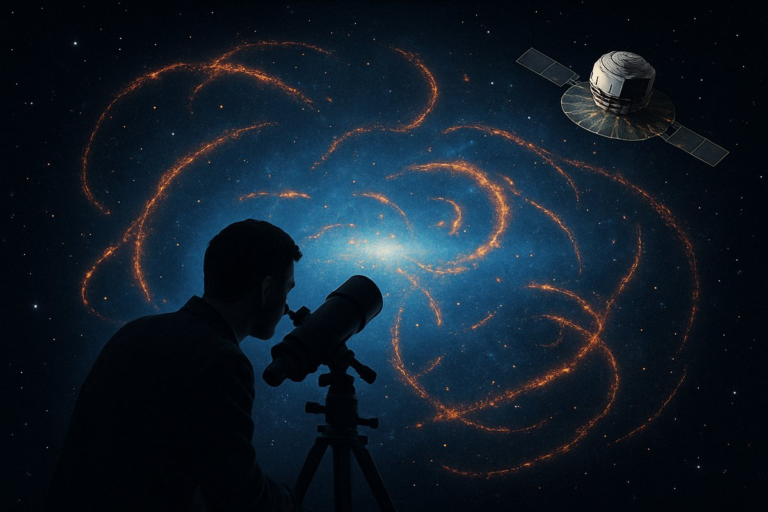
One unexpected front in this struggle is the open-source community. Hobbyists building backyard radio telescopes already track near-Earth objects and share real-time signals online. A growing movement is developing DIY quantum nodes: low-cost laser pointers, beam-splitters and modulators that let anyone participate in entanglement experiments. By diversifying network ownership, proponents argue, surveillance becomes harder to centralize.
Platforms hosting these designs emphasize modularity: anyone can swap in a new photon detector or encryption algorithm without redesigning the entire node. Enthusiasts trade code snippets that implement decoy-state protocols-randomized signals that reveal the presence of eavesdroppers. In virtual hackathons, teams simulate deep-space scenarios, stress-testing code against simulated cosmic ray interference and adversarial actors.
The Promise-and Peril-of Synthetic Aperture Cryptography
A more speculative idea borrows from synthetic aperture radar. Instead of building a single gargantuan optical relay, dozens or hundreds of nanosatellites disperse across orbit, each transmitting tiny shards of data. The recipient’s ground station or another relay reassembles the shards into meaningful information. Eavesdroppers lacking precise orbital data and timing synchronization see only noise.
In laboratory settings, synthetic aperture cryptography has demonstrated resilience against partial interception. But scaling it to a functioning constellation raises questions: can you maintain stable formations in low Earth orbit for months? How do you authenticate a swarm of rapidly moving nodes? If even a few satellites fall out of alignment or into adversarial hands, the noise could collapse into intelligible data for the wrong listener.
Navigating Governance Beyond Earth’s Horizon
As missions to the lunar south pole, Mars and the moons of Jupiter accelerate, governance must evolve faster than telescopes on mountain tops. Many experts suggest a tiered approach: initial agreements among major spacefaring states to curb overt interception and share best practices, followed by broader international negotiations under the United Nations Committee on the Peaceful Uses of Outer Space (COPUOS).
Key proposals include:
These measures aim to strike a balance. Researchers can continue studying cosmic background radiation, mapping exoplanet atmospheres, and coordinating asteroid deflection efforts without fear of hidden observers harvesting personal or proprietary data.
Cosmic Curiosity Meets Collective Responsibility
Humanity’s impulse to explore has taken us from the banks of the Nile to the rings of Saturn. As our instruments venture farther, they carry the same dilemmas we’ve faced on Earth: how to reap the benefits of connectivity while safeguarding the sanctity of private correspondence and personal data. In this new era, transceivers may orbit Phobos or sit on Europa’s ice crust, but the fundamental question remains unchanged: who watches the watchers?
Finding a path forward demands technical creativity, political will, and ethical foresight. Quantum encryption, synthetic aperture schemes, and citizen-science networks are promising, but they require widespread adoption and transparent governance. The proposed cosmic digital rights charter cannot be a hollow treaty-it must carry enforcement mechanisms and the support of space agencies, private companies, and grassroots movements alike.
As signals pulse across millions of kilometers, linking colonies, research outposts, and Earth-bound control centers, we’re challenged to build a space-time network that respects individual dignity. The silence of the cosmic void need not be a vacuum of oversight; instead, it can be a realm where curiosity and privacy coexist, where the echo of a quantum photon safeguards the secrets we choose to share.
Each photon matters, each protocol upgrade counts, and every policy vote shapes the future of interstellar communications. In the quiet between stars, the guardians of the next frontier aren’t just engineers and politicians-they’re every one of us who believes that the right to privacy must follow humanity wherever it roams.