Location
Mount Vernon, WA 98274
Location
Mount Vernon, WA 98274

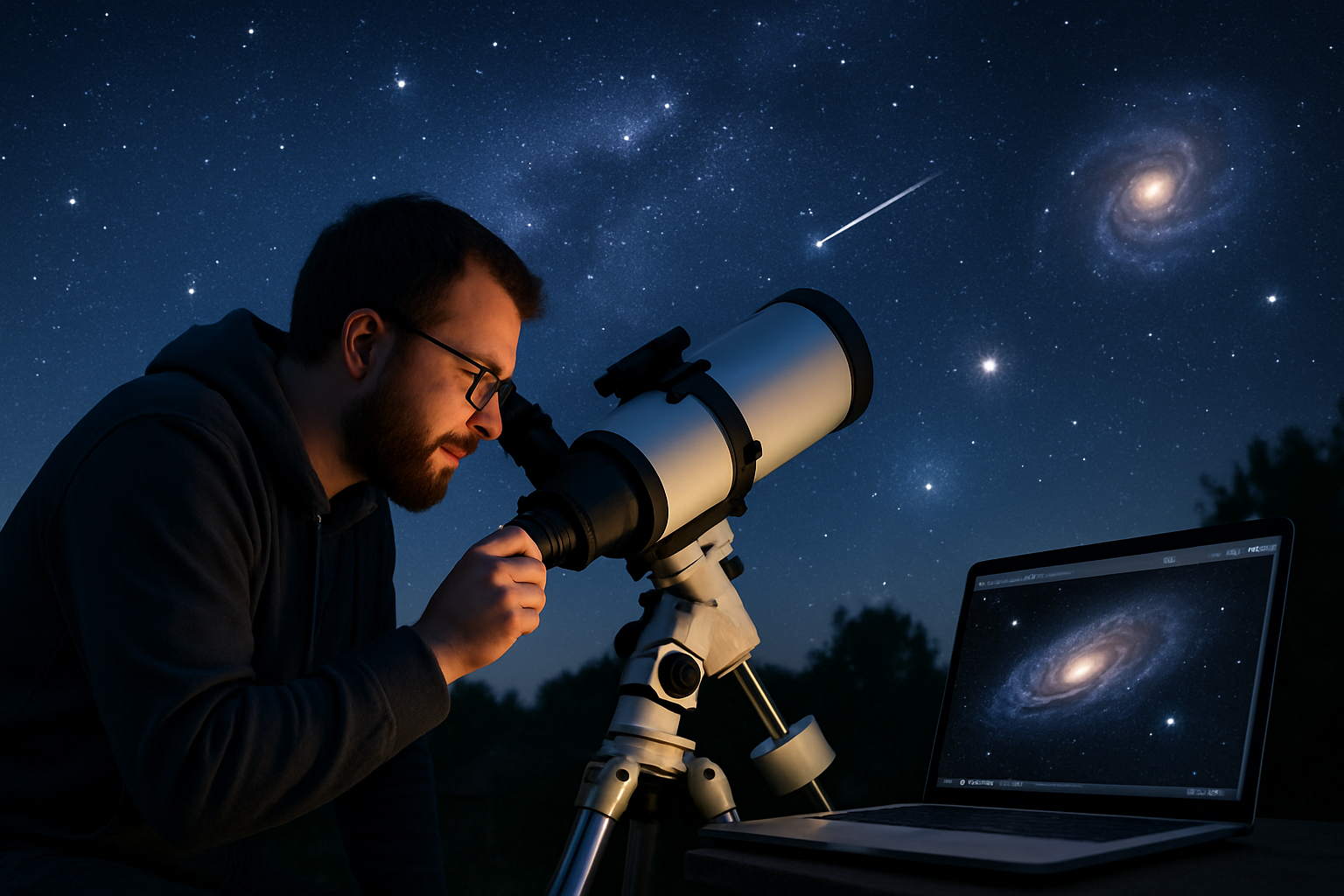
Across backyards and online platforms, everyday stargazers are making real contributions to space science. From classifying distant galaxies to tracking meteor showers, cosmic curiosity unites communities and fuels new discoveries. This article explores how individuals harness affordable tools, digital networks, and a profound sense of wonder to reshape our understanding of the universe.
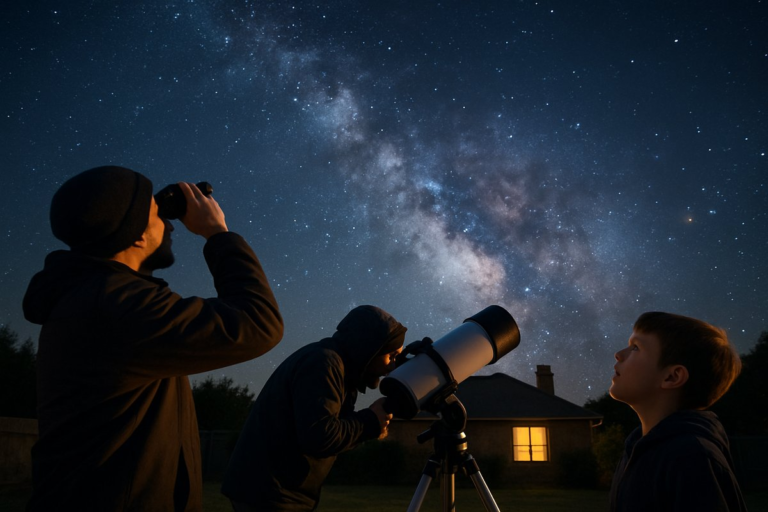
On a clear evening in a suburban backyard, the hum of insects mingles with an excited gasp as a teenager peers into a modest telescope. Candlelight from a nearby lantern casts dancing shadows on rustling leaves, creating a tranquil stage for an encounter with the cosmos. Through that narrow eyepiece, a swirl of rings and moons becomes a vivid revelation, sparking a sense of awe usually reserved for grand observatories. They crowd around, sharing observations, scribbling notes, and swapping excited theories, channeling curiosity into something tangible. This quiet scene mirrors a global movement: individuals from city rooftops to rural fields are rediscovering an ancient impulse to look upward-and to wonder.
Across the globe, citizen science platforms are turning casual stargazers into frontline explorers. Projects like Galaxy Zoo invite volunteers to classify distant galaxies by shape, while NASA’s Exoplanet Watch empowers sky watchers to help confirm worlds beyond our solar system. Amateur radio astronomers monitor fast radio bursts using homebuilt arrays, and urban astrophotographers process raw images from backyard telescopes to reveal star-forming regions. Without formal training, participants contribute real data that advances professional research. These efforts blur the boundary between expert and enthusiast, demonstrating that cosmic curiosity flourishes when communities of learners collaborate in an open, inclusive environment.
Meanwhile, the James Webb Space Telescope has delivered a flood of breathtaking images that hint at the universe’s earliest chapters. Peering deeper into space than ever before, Webb unveiled galaxies forming just a few hundred million years after the Big Bang. Its infrared sensors exposed pockets of dust cradling newborn stars and sketched the chemical signatures of far-off exoplanet atmospheres. News outlets buzzed with headlines about early galaxy clusters and mysterious dark matter filaments, but behind every press release lies months of meticulous calibration and collaborative analysis. Enthusiasts eagerly await the next data release, dissecting spectral graphs and sharing annotated screenshots online.
Beyond sheer spectacle, cosmic discovery resonates on a personal level. Psychologists have found that stargazing can cultivate a sense of awe, which in turn reduces stress and fosters altruistic behavior. People who regularly engage with big-picture questions report heightened creativity, improved problem-solving skills, and a deeper appreciation for shared human heritage. In support groups and classrooms, educators harness these emotional benefits by guiding participants to observe lunar phases, record planetary alignments, or track transient events like meteors. This practice of mindful awe, grounded in scientific observation, blends emotional intelligence with empirical curiosity to create a richer learning experience.
The urge to chart the heavens is hardly new. Stone Age communities aligned megaliths with solstice points, while ancient civilizations from Mesopotamia to Mesoamerica built raised platforms to follow celestial cycles. In medieval Europe, scholars employed astrolabes to predict eclipses, and in the Islamic Golden Age, polymaths refined star catalogs that would influence navigation for centuries. These traditions remind us that exploring the sky is both a cultural expression and a scientific pursuit. Modern amateurs stand on the shoulders of these early observers, drawing inspiration from millennia of celestial lore even as they deploy digital sensors and networked telescopes.
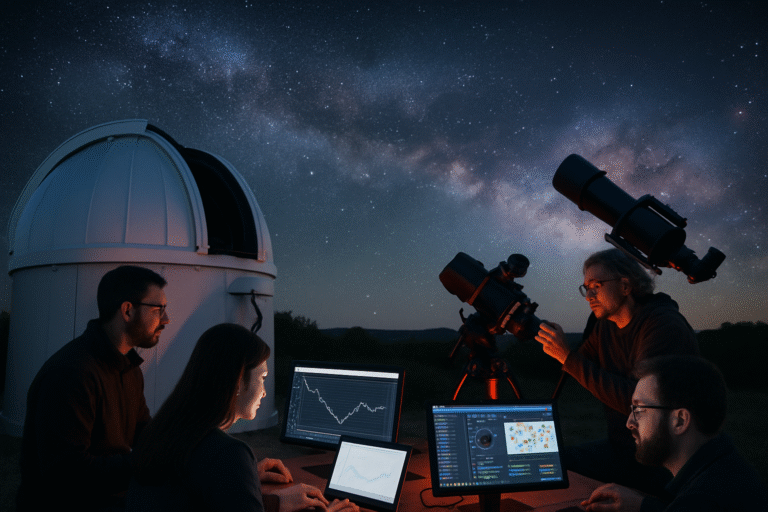
Today’s technological toolkit accelerates discovery. Automated telescopes scan the sky nightly, feeding terabytes of data into machine-learning algorithms that flag anomalies-dimming stars that hint at orbiting exoplanets, or transient flashes that mark cosmic collisions. Open-source software lets curious minds write custom routines to process raw FITS files, while cloud platforms provide scalable computing power. Meanwhile, radio arrays composed of inexpensive antennas can be assembled in backyards, turning low-cost hardware into probes for pulsars and interstellar molecules. These innovations reflect a shift from isolated instruments to distributed networks, where individual contributions combine into a planetary-scale observatory.
As stargazers reclaim the night, light pollution remains a formidable challenge. City glow washes out faint objects, forcing many enthusiasts to travel long distances for truly dark skies. To combat this, grassroots movements have established dark sky reserves-protected zones where artificial lighting follows strict guidelines. Eco-friendly LED fixtures and downward-shielded lamps minimize glare and preserve nocturnal habitats. In parallel, educational campaigns encourage urban planners to balance safety with sky visibility. Citizens now work with local governments to retrofit streetlights and create stargazing parks, proving that sustainability and scientific curiosity can advance hand in hand.
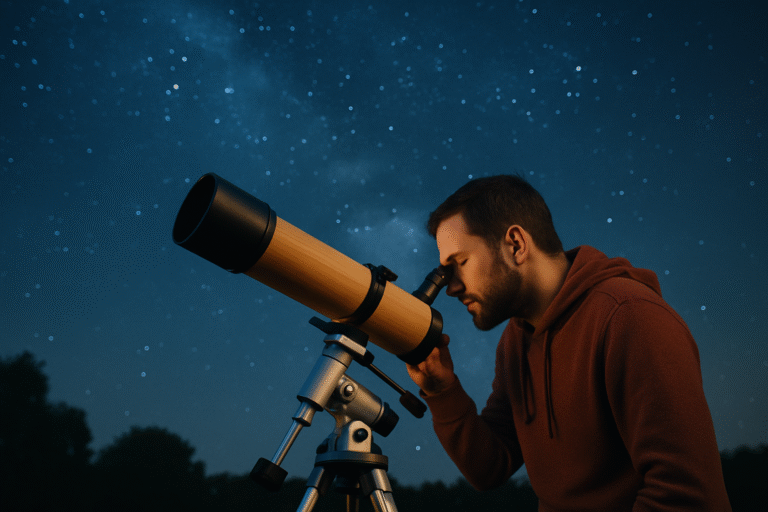
For those eager to join the cosmic quest, the barrier to entry has never been lower. A pair of compact binoculars can reveal lunar craters, asteroid belts, or Jupiter’s four largest moons. Affordable Newtonian telescopes offer sharper views of nebulae and galaxies, while point-and-click mounts track objects automatically. Smartphone apps overlay star charts on live camera feeds and send alerts for upcoming meteor showers or comet appearances. Online forums and local astronomy clubs provide mentorship, sharing tips on calibration, image processing, and observing techniques. With few hundred dollars and a willingness to learn, newcomers can record their own observations and contribute valuable insights to global databases.
As the calendar fills with celestial events, enthusiastic watchers mark their charts for annual meteor showers like the Perseids and Leonids. Next total solar eclipse draws planning parties to remote countryside cabins, and curious orbital mechanics students calculate when the International Space Station will streak overhead. Space agencies announce missions targeting near-Earth asteroids and Europa’s hidden ocean, expanding the frontier of our solar ambitions. Even a simple lunar eclipse becomes an opportunity for cross-generational gatherings-grandparents sharing myths, parents explaining science, and children dreaming of building the next lunar habitat.
Looking forward, a fleet of upcoming missions promises to extend our cosmic reach. The Artemis program aims to establish a sustainable lunar presence, with commercial landers and international partners in tow. The Europa Clipper will survey under-ice oceans, seeking signs of habitability in one of the solar system’s most tantalizing targets. On the astrophysics front, next-generation observatories such as the Nancy Grace Roman Space Telescope will map dark energy and uncover thousands of new exoplanets. Meanwhile, private ventures pursue point-to-point suborbital travel, opening the door for researchers and enthusiasts to experience Earth’s curvature firsthand.
Amid this tidal wave of exploration, individual passion remains the driving current. The act of pointing a telescope, recording a light curve, or sketching star fields kindles curiosity that transcends backgrounds and professional titles. Students form astronomy teams that win international competitions, retirees mentor younger observers, and entire communities host star parties under protective night skies. These collective efforts forge a narrative where everyone has a role, from data analyst to story-teller, in decoding the universe’s mysteries.
Resources for lifelong learners continue to grow. Online courses offered by universities guide participants through the basics of celestial mechanics, spectroscopy, and photometry. Podcasts tell stories of cosmic phenomena in accessible language, while science magazines and research journals provide deeper dives. Citizen-science platforms publish project blueprints, and open-source code repositories host custom scripts for data analysis. Public libraries and makerspaces often loan telescopes or host workshops, so curiosity can flourish without steep financial barriers, ensuring that the journey from novice to seasoned observer remains open to all.
The human impulse to reach for the stars remains as vital as oxygen in our lungs. Each glance skyward carries the potential to rewrite textbooks, spark a scientific breakthrough, or simply remind us of our place in a vast cosmos. Whether you live in a bustling metropolis or a remote village, cosmic curiosity invites you to participate in an adventure that spans time and space. All it takes is a bit of wonder, a touch of perseverance, and the willingness to look up.