Location
Mount Vernon, WA 98274
Location
Mount Vernon, WA 98274

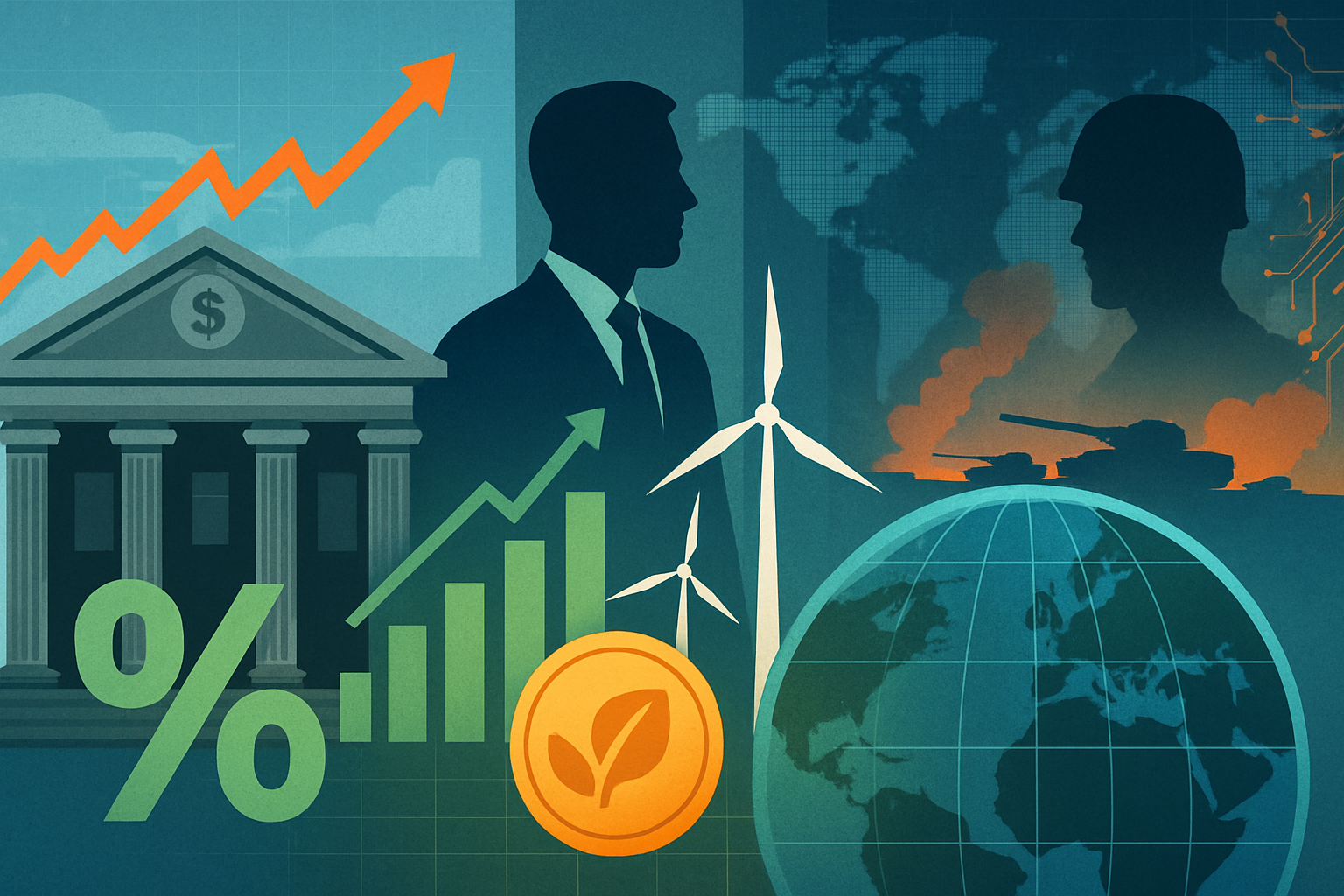
As central banks shift toward tighter monetary policies to rein in lingering inflation, financial markets face a turning point where cost of capital rises just as demand for sustainable funding surges. Investors and policymakers must reconcile short-term stability with long-term climate and inclusion goals in a landscape reshaped by digital innovation and geopolitical strain.
In recent quarters, global financial markets have encountered a dual challenge: central banks are steadily withdrawing emergency support and raising borrowing costs, even as the need for sustainable and inclusive financing has never been more urgent. Inflationary pressures that emerged from supply-chain disruptions and energy shocks prompted an unprecedented policy response. Now, the narrative has shifted from liquidity provision to tightening the reins. Bond yields have climbed, credit conditions have cooled, and risk appetites have recalibrated-all against the backdrop of mounting climate and social demands on capital markets.
Corporate treasurers and household borrowers alike are feeling the squeeze. Investment-grade issuers must grapple with higher coupon expenses just as they aim to fund decarbonization projects. Small and medium-sized enterprises, which rely on bank lending and capital markets for growth, face a narrowing channel of affordable credit. Consumer loans and mortgages are adjusting to higher reference rates, raising debt servicing costs at a time when wage growth remains uneven across sectors.
For policy officials, the tension is acute. Monetary authorities are charged with the immediate mandate to defend price stability, yet they also recognize that a durable transition toward net-zero economies will require capital flows at scale. This has spurred experimentation with targeted lending facilities and novel refinancing schemes that link the price of funding to environmental performance. Green refinancing windows offer banks preferential access to central bank liquidity in exchange for expanding their green lending portfolios. Preliminary data from regional pilot programs show steady uptake, though concerns about greenwashing and measurement integrity persist.
At the same time, the green bond universe continues to expand, reaching new segments of the corporate and sovereign space. A growing cohort of transition bonds-debt instruments that finance emissions reduction roadmaps rather than completed green assets-has opened the door for industrial firms charting a path from high-carbon processes toward cleaner production methods. While this broadens the market, it also raises questions about standardization and investor due diligence. A handful of major issuers have adopted independent verification platforms and granular project reporting to bolster credibility, setting benchmarks for others to follow.
Meanwhile, the digital frontier is reshaping finance in profound ways. Tokenization of real-world assets, from infrastructure projects to renewable energy credits, promises to unlock new liquidity pools by fractionalizing ownership. Central bank digital currency (CBDC) pilots are advancing from proof-of-concept to controlled live testing in multiple jurisdictions. Public-private partnerships in digital wallets and regulatory sandboxes are fostering innovation while preserving financial system stability. The promise of programmable money-where funds can be tagged for specific uses such as green investments or social loans-could deliver more transparent and outcome-oriented capital flows.
However, technology alone will not solve all challenges. Regulatory divergence across borders remains a hurdle. Differing taxonomies for ESG assets, inconsistencies in disclosure requirements and data gaps on climate risks complicate cross-border capital allocation. Asset managers and compliance officers are increasingly focused on integration of climate scenario analysis and stress tests into risk management frameworks. Large custodians are offering climate data APIs that feed directly into portfolio management systems, enabling real-time assessment of carbon footprints and transition exposure.
Emerging markets confront a distinct set of pressures. Sovereign debt levels have risen in many low-income economies, fueled by pandemic relief measures, energy import bills and bouts of currency depreciation. At the same time, these countries stand on the front lines of climate vulnerability. Innovative financing structures-such as debt-for-nature swaps and resilience bonds-are being negotiated under international programs. The International Monetary Fund and multilateral development banks have launched blended-finance facilities that mix concessional grants with private capital to fund water-resource projects and climate-resilient infrastructure.
Investors are adapting their strategies accordingly. Passive equity funds are now supplemented by actively managed green bond portfolios, private credit vehicles with sustainability screens and venture capital funds targeting clean-tech start-ups. Inflation-linked debt remains a prized hedge, though supply constraints and central bank issuance choices have pushed up valuations. Commodity-linked structured products are also in vogue, offering exposure to critical minerals needed for batteries and renewable energy hardware.
For fixed-income investors, duration management has become top of mind. The shift toward a steeper yield curve in some regions invites roll-down strategies, while steepening in others amplifies convexity risks. Portfolio managers are deploying convexity hedges and selective short-duration positions, balancing the prospect of further rate hikes against the chance of policy pivots should growth falter. Credit analysts are revisiting balance-sheet stress tests under higher-rate scenarios, paying particular attention to capacity for capital expenditure in climate-intensive sectors.
Equity investors, too, are rethinking sector allocations. Renewable energy firms face both growth opportunities and policy uncertainty, as governments adjust subsidy regimes and carbon pricing mechanisms. Technology firms offering decarbonization solutions-from carbon capture to smart grids-are attracting record inflows, yet valuation risks remain as macro headwinds persist. The interplay of monetary policy tightening and sector rotation demands nimble risk-management techniques and scenario planning.
At the intersection of finance and policy, several proposals have gained traction:
These initiatives underscore the growing realization that climate and financial stability are deeply intertwined objectives. Central banks are exploring climate scenario analysis within monetary policy models, while fiscal authorities design green tax incentives to leverage private investment. Collaboration with multilateral organizations and development institutions aims to scale pilot projects into mainstream financial instruments.
Looking ahead, market participants anticipate continued volatility as monetary policy tightening converges with supply innovations and digital transformation. The pace of transition in energy markets, shifts in consumer spending patterns and evolving geopolitical alignments will shape risk premia across asset classes. Traders and portfolio managers must remain vigilant, continuously updating assumptions on factors such as carbon pricing trajectories, green subsidy schemes and digital asset regulation.
For corporates, the imperative is clear: integrate sustainability into core financing strategies and capitalize on new debt instruments while remaining mindful of rising funding costs. Transparent reporting, adherence to evolving standards and engagement with stakeholders will be essential to secure favorable pricing and broaden investor bases. Financial institutions, in turn, must refine underwriting processes to incorporate environmental, social and governance risks without unduly restricting credit to transition-focused firms.
Policymakers face the delicate task of calibrating policy tools for dual mandates: restoring price stability and facilitating a just transition to a low-carbon economy. Coordination between monetary, fiscal and prudential authorities can help prevent policy conflicts. Equally important is investor education and capacity-building in emerging markets, ensuring that new financial products serve local development and climate resilience goals.
The unfolding era in finance will likely be defined by balancing acts: between short-term stability and long-term sustainability; between technological innovation and regulatory safeguards; between global coordination and domestic imperatives. Those who navigate these complexities successfully may uncover new pathways to growth while contributing to a more resilient, equitable and climate-aware financial system.
Ultimately, the path forward will require diverse stakeholders-governments, central banks, investors, corporations and civil society-to collaborate on creating a financial architecture fit for the challenges of our time. As the global community seeks to realign capital flows with environmental and social imperatives, the interplay between tightening monetary cycles and the green financing imperative will define the next chapter of economic history.