Location
Mount Vernon, WA 98274
Location
Mount Vernon, WA 98274

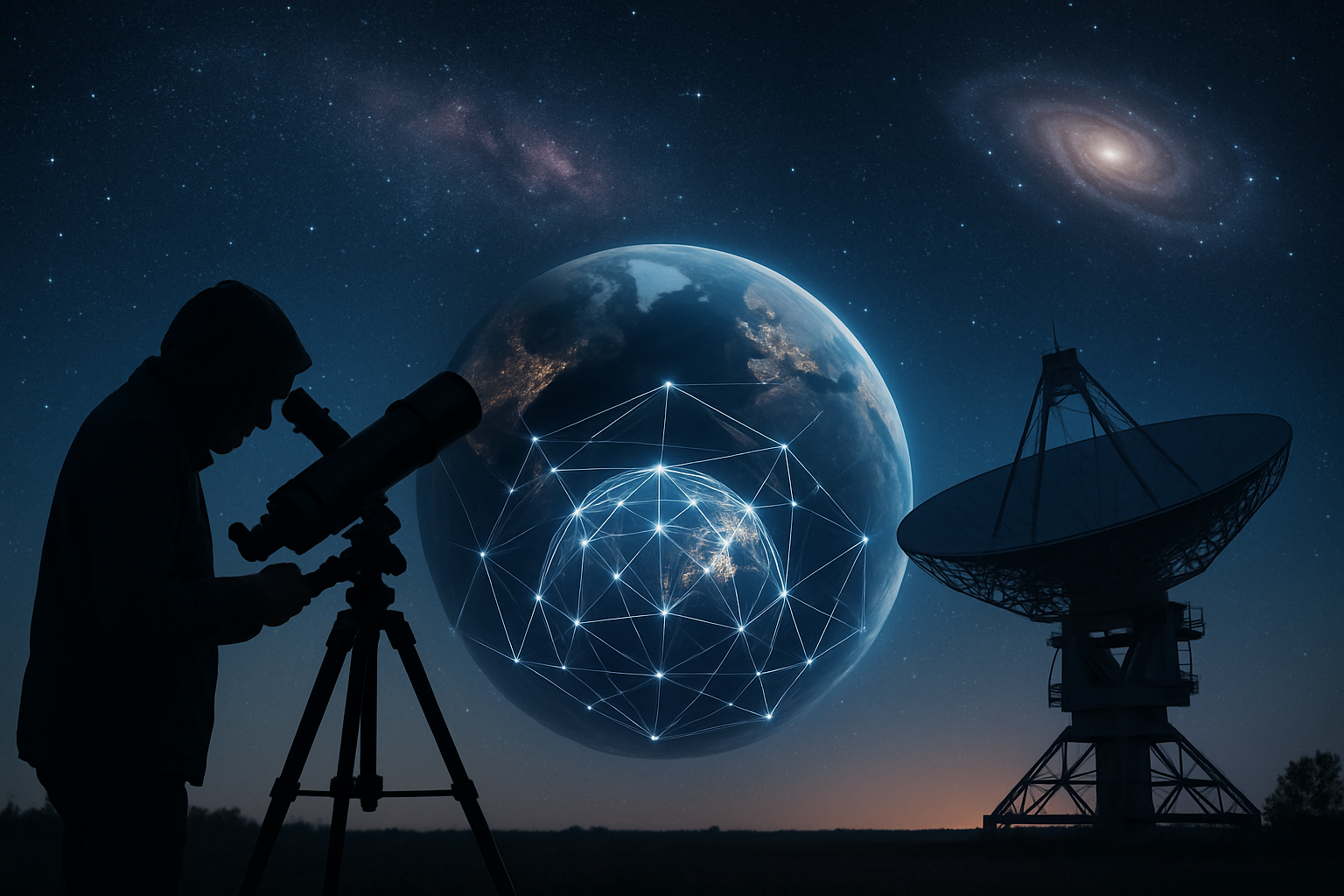
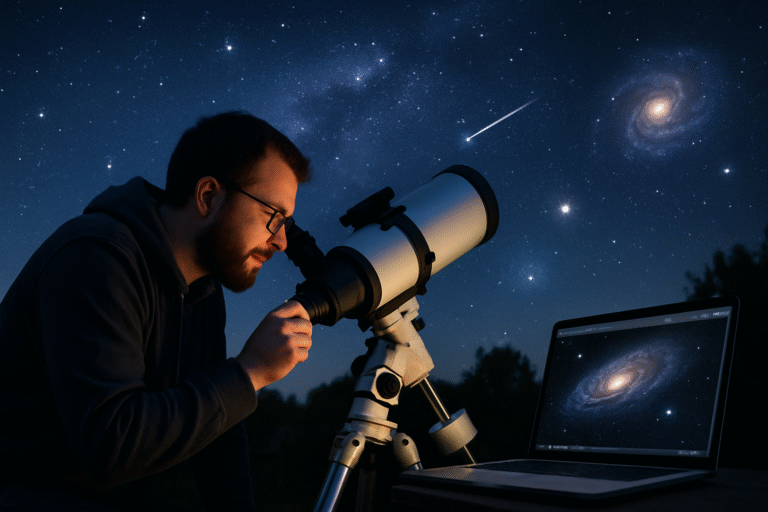
From backyard telescopes to global data networks, cosmic curiosity is driving a renaissance in space exploration. Amateur astronomers, citizen scientists, and emerging technologies are converging to reshape how we observe, interpret, and engage with the universe.
Every revolution in our understanding of the cosmos begins with a simple impulse: curiosity. It is the same spark that once urged ancient stargazers to mark the patterns of Orion and guided astronomers who first charted the motions of planets without leaving their homes. Today, that flame has grown into a global phenomenon, with amateur astronomers, citizen scientists, and engineers collaborating across time zones and disciplines to unlock the secrets of the universe.
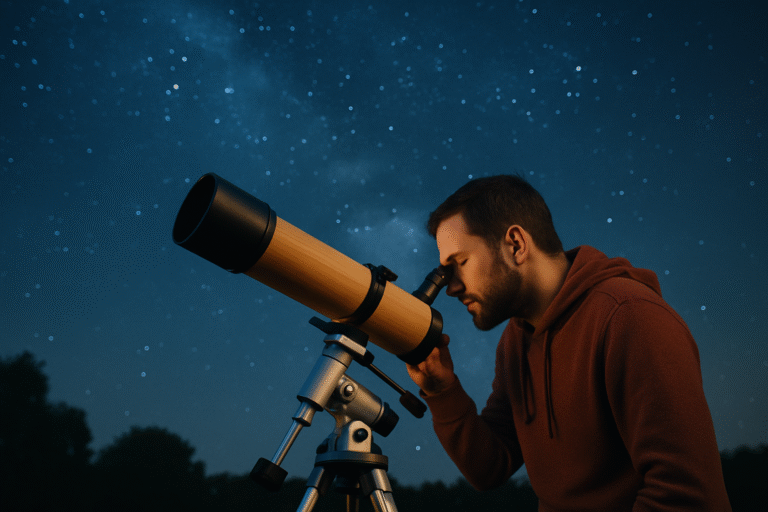
A century ago, only a handful of observatories could mount the mirrors and lenses necessary to peer into deep space. Now, affordable telescopes and open-source software have placed that power in the hands of anyone willing to learn. Backyard enthusiasts scan the skies for transient events, record meteor showers, and share their discoveries online. Those once marginal contributions are increasingly vital as professional observatories prioritize large surveys and space missions.
Small satellites known as CubeSats are redefining what it means to go into orbit. By standardizing bus designs and payload slots, universities and startups can now launch experiments at a fraction of traditional costs. These pocket-sized explorers carry instruments ranging from ultraviolet imagers to miniature spectrometers. In many ways, they turn space into a modular laboratory, where cosmic curiosity drives iterative design and rapid deployment.
Multiwavelength observation is no longer the exclusive domain of large agencies. Radio receivers built from repurposed consumer electronics pick up pulsar signals. Infrared detectors cooled by DIY Stirling engines reveal dusty star-forming regions. Even amateur spectroscopists analyze the chemical signatures of stars in real time. Together, these homemade instruments weave a richer tapestry of cosmic phenomena than any single observatory could capture alone.
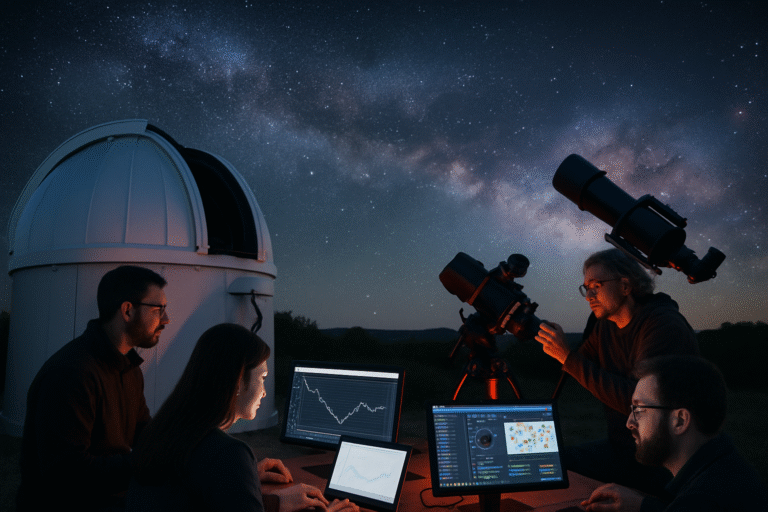
The deluge of data produced by these efforts might have overwhelmed a generation ago. Today, artificial intelligence and machine learning algorithms sift through millions of images, flagging anomalies, classifying galaxies, and identifying potential exoplanet transits. Volunteers then review these flagged data, blending human pattern recognition with algorithmic scale. The result is a new hybrid workforce of humans and machines united by curiosity.
Citizen science platforms have blossomed in recent years, inviting volunteers to help decode puzzles that computers struggle to solve. Projects range from mapping lunar craters to tracking variable stars and hunting for gravitational lensing events. Each contribution, even a single classification or measurement, refines algorithms and guides follow-up observations by professional telescopes.
Amateur astronomers have made headlines by discovering supernovae before some professional surveys detect them. One observer’s routine monitoring of a familiar galaxy yields the first indication of a dying star’s final outburst. Another enthusiast’s precise timing of an asteroid’s occultation helps refine its orbital path, improving our understanding of potential Earth hazards.
Immersive technologies are amplifying cosmic curiosity beyond the physical act of stargazing. Virtual reality applications immerse users in real astronomical data, recreating the experience of hovering above the moon’s surface or sailing alongside a comet’s tail. Augmented reality overlays constellations on live sky images, guiding newcomers through the night sky and demystifying celestial coordinates.
Podcasts, social media livestreams, and online workshops have turned once-lonely observers into global communities. Beginners now learn telescope calibration, astrophotography techniques, and data analysis methods from seasoned hobbyists broadcast from their home observatories. Shared enthusiasm sparks impromptu collaborations, from organizing coordinated observations of a comet flyby to pooling resources for a dedicated citizen-built telescope array.
Developing the skills to participate in cosmic exploration has never been more accessible. Online courses teach Python programming for data analysis. Open-source designs guide the construction of Dobsonian telescopes at a fraction of retail cost. Star chart apps evolve weekly, integrating community feedback to improve usability. The barrier to entry has shifted from expensive equipment to a willingness to learn and connect.
Universities and space agencies have adopted open data policies, releasing terabytes of images and measurements to the public within hours of collection. This transparency fuels independent research and education, allowing anyone to explore raw data from space telescopes, planetary probes, and gravitational wave detectors. The democratization of data ensures that cosmic curiosity is no longer confined to ivory towers.
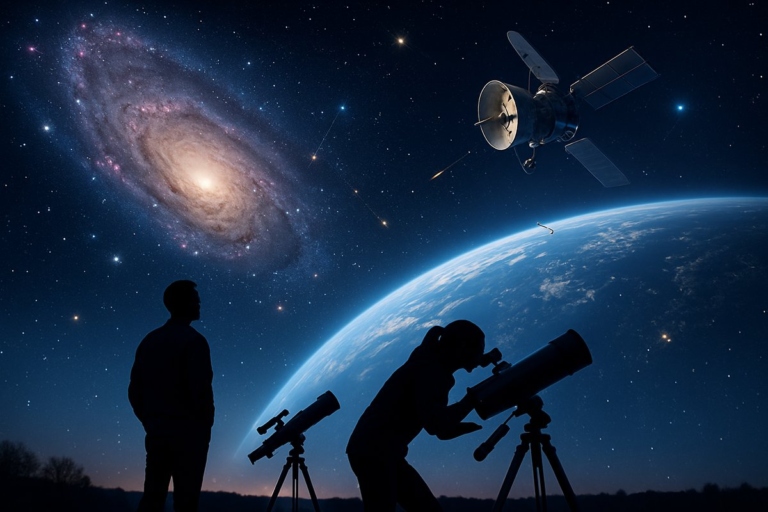
Upcoming missions promise to deepen this engagement. Space telescopes equipped with new detectors will scan for biosignatures in exoplanet atmospheres. High-altitude balloons will capture ultraviolet light from starburst regions. Ground-based arrays will link hundreds of radio dishes across continents to form virtual apertures spanning kilometers. Each project invites the public to follow along, propose observations, and even operate remote instruments in near real-time.
For those eager to capture their own astronomical images, astrophotography has matured into a finely tuned art. Filters isolate hydrogen alpha emissions, revealing the glowing tendrils of nebulae. Guiding systems correct for Earth’s rotation, enabling exposures of several minutes without star trails. Post-processing workflows, shared in community forums, teach new users how to calibrate and stack images for maximum detail.
Smartphone adapters transform widely available devices into entry points for lunar and planetary imaging. By clipping a phone’s camera lens over a telescope eyepiece, users record video sequences that, when processed, yield surprisingly detailed close-ups of lunar craters or Saturn’s rings. This fusion of consumer tech and backyard gear lowers the threshold for capturing one’s first planetary image.
The intersection of cosmic exploration with Earth sciences offers fresh perspectives on sustainability. Satellites monitoring vegetation patterns, atmospheric chemistry, and ocean currents share platforms with space telescopes. Engineers design multilayer insulation and solar arrays that reduce launch mass and power budgets for both Earth observation and cosmic missions. In this way, curiosity about the stars feeds into a better understanding of our own planet.
Beyond data and technology, cosmic curiosity has a profound emotional dimension. Observing a supernova candidate in real time connects an observer to events unfolding millions of light-years away. Tracking the shadow of a solar eclipse across continents evokes a collective sense of unity beneath a single sky. These experiences foster humility, wonder, and a renewed sense of stewardship for our fragile world.
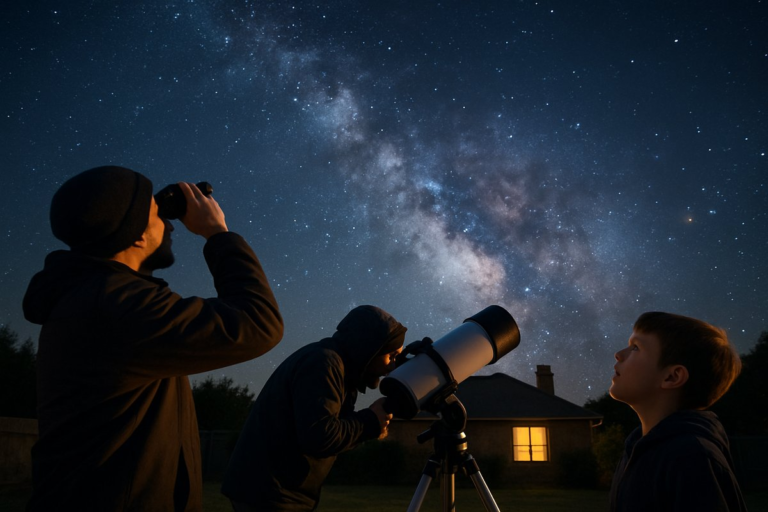
For those ready to join this era of cosmic exploration, the first step is often simply looking up. Local astronomy clubs host public viewing nights where newcomers handle binoculars and learn sky lore. Online platforms recommend affordable starter kits and connect users with mentors. From there, ambition drives deeper engagement-writing code to analyze data, building a personal observatory, or contributing to large-scale surveys.
In a world where so much seems preordained, cosmic curiosity reminds us that the next discovery could come from anyone, anywhere. The tools may evolve, but the human drive to explore remains constant. By embracing collaboration, open data, and emerging technologies, we stand on the threshold of an unprecedented era. The universe is vast, and our collective curiosity is growing by the day.
As dawn breaks on a new generation of explorers, we are called not only to observe but to participate. Every classification, every image, every question brings us closer to understanding our place among the stars. The cosmos has waited for our curiosity. Now it is our turn to listen and respond.