Location
Mount Vernon, WA 98274
Location
Mount Vernon, WA 98274

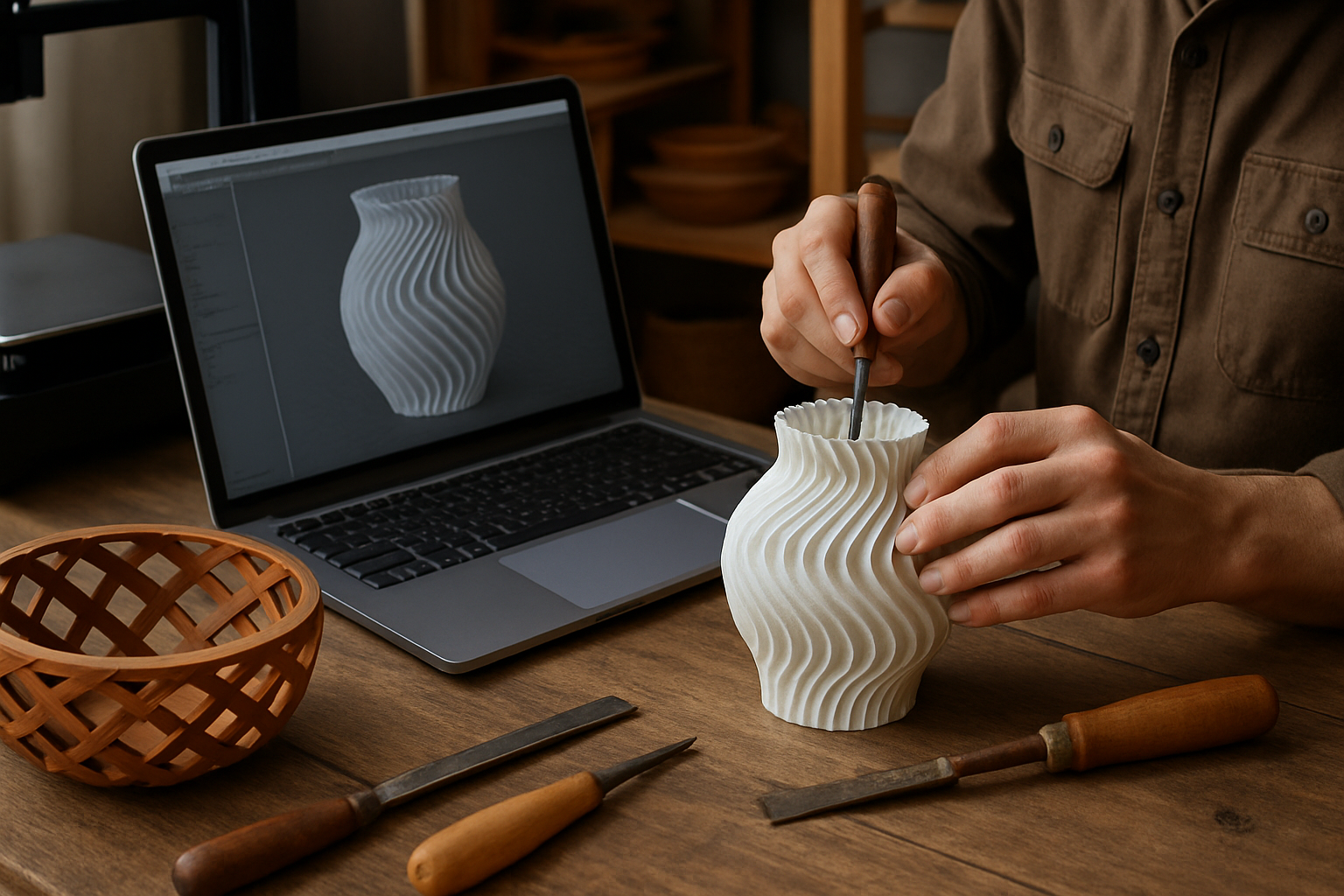
A growing wave of creators is blending digital fabrication tools with age-old crafting techniques to forge novel forms of expression. By marrying parametric algorithms and 3D printing with hand finishing and traditional materials, this hybrid approach is redefining the boundaries of art and design.
Amid rapid shifts in creative technology and a renewed appreciation for handcrafted work, a renaissance is unfolding at the crossroads of digital and analog making. Artists and designers are no longer constrained to choose between code-based modeling and manual techniques-today’s most exciting pieces often straddle both worlds. From intricate tableware printed in bioplastic and finished in artisanal glazes to sculptural installations routed in wood but envisioned through generative algorithms, hybrid fabrication is emerging as a compelling vision for the future of craft.
This movement traces its roots to the early days of computer-aided design, when architects and engineers first used CNC milling and rapid prototyping machines to test forms. Those pioneering experiments gradually migrated into creative workshops, where makers discovered that digital processes could speed up iteration while hand skills could add warmth, character, and unpredictability. As desktop 3D printers became affordable and open-source software matured, community workshops and small studios began to experiment with combining subtractive and additive methods in single objects.
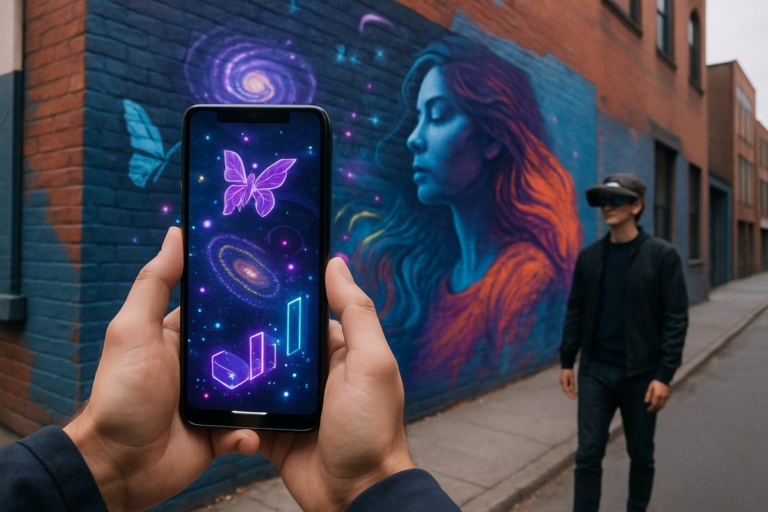
Today, one sees furniture pieces born through parametric scripts that generate organic curves, milled from plywood sheets and then sanded, stained, and assembled by hand. In several European design festivals, installations comprised interlocking modules fabricated using laser cutters and felt or silicone gaskets, enabling lightweight structures that can be reconfigured on the spot. Even street artists are using stencil workflows driven by digital sketches, blending projection mapping, vinyl cutting, and freehand painting to animate urban walls.
Consider a small design studio that specializes in seating solutions. Their workflow begins with a custom plugin inside a 3D modeling environment: designers sketch initial profiles, then toggle sliders to adjust curvature, thickness, and ergonomic data derived from digital body scans. Once the core form is finalized, a CNC router carves the seat blanks from sustainable timber panels. The makers then switch gloves-putting down programming keyboards and picking up planes, files, and brushes-to smooth out tool marks, apply a natural oil finish, and test comfort with real users. This interplay of algorithmic precision and human touch ensures both repeatability and soul.
On the additive side, advances in multi-material 3D printing have sparked new experiments in surface texture and structural layering. Artists are now embedding conductive filaments, flexible polymers, or plant-based resins into a single print, opening routes for integrated electronics or living composites. After the print completes, traditional techniques such as cold enameling, patina application, or hand-woven embellishments transform a raw output into a gallery-worthy piece. These hybrid workflows also encourage sustainability: by printing only the geometric core and adding strength or finish with local, low-impact materials, creators reduce both material waste and transport emissions.
Sustainability remains a central concern in this hybrid movement. While some fear that digital processes foster disposable culture, many makers are doing the opposite: embracing upcycling, refurbishing older prints, and testing bio-derived filaments made from algae or recycled coffee grounds. In community woodshops, offcuts of oak and maple get fed into resin-infused molds, producing striking composite panels that carry both the grain of the original wood and the uniformity of engineered materials. Studio owners report that clients increasingly ask for visible markers of craftsmanship alongside high-tech geometry, viewing the pairing as an ethical statement about resourcefulness and respect for human skill.
The democratization of tools has energized grassroots innovation. Maker spaces and Fab Labs worldwide now host regular hybrid-fabrication jams, where hobbyists, students, and professionals converge to swap parametric scripts, share hand-tool tips, and troubleshoot workflow bottlenecks. Open repositories of design files allow anyone to download a lamp shade that snaps together with 3D-printed connectors, then finish it with fabric offcuts and eco-friendly dyes. These hybrid kits spark curiosity and lower barriers to entry, inviting participants to remix digital forms, experiment with color and texture, and discover how code can inform craft as much as vice versa.
For those looking to dive in at home or in a small studio, a handful of practical tools can make the leap from concept to object surprisingly accessible. A consumer-grade resin printer now offers resolutions fine enough for jewelry prototypes, while entry-level CNC routers adapted for desktop use can cut thin sheet materials at respectable speeds. Open-source slicing software supports multi-step workflows, exporting both g-code for milling and STL files for printing. Pair these with a modest toolkit-chisels, sanding blocks, quality brushes-and a basic finishing station with non-toxic stains, and the stage is set for hybrid fabrication without a multi-million-dollar setup.
Developing the right skills and mindset is equally important. Established craft traditions often emphasize patience and incremental progress, while digital methods reward rapid iteration and quantitative feedback. Successful hybrid makers learn to move fluidly between these tempos: iterating a form in software, printing or carving a prototype, stepping away to observe the tactile qualities, and then returning to tweak the algorithm. Collaboration also flourishes when specialists cross boundaries-programmers learning basic joinery or woodworkers exploring user interface design-resulting in richer conversations and more nuanced outcomes.
Looking to the horizon, artificial intelligence and machine learning promise to deepen the synergy between pixels and clay. Generative models can propose novel structural logics or textural motifs that would be difficult to conceive by hand alone. Meanwhile, real-time scanning systems allow scanned gestures, brushstrokes, or even vocalizations to influence on-screen forms before any material process begins. As cloud-based fabrication networks develop, designers may commune with remote workshops, sending encrypted parametric files that get automatically matched with local materials and skill sets, then shipped back as finished pieces.
Ultimately, the revival of hybrid fabrication underscores a broader shift in creative culture: a recognition that neither code nor craft holds a monopoly on ingenuity. By bridging digital precision and human intuition, this movement fosters objects that reflect both technological possibility and the imprint of individual hands. As more makers, educators, and institutions embrace hybrid workflows, we can expect to see a new wave of art and design that stands at once rigorous and poetic-uniting the logical beauty of mathematics with the expressive warmth of tradition.