Location
Mount Vernon, WA 98274
Location
Mount Vernon, WA 98274

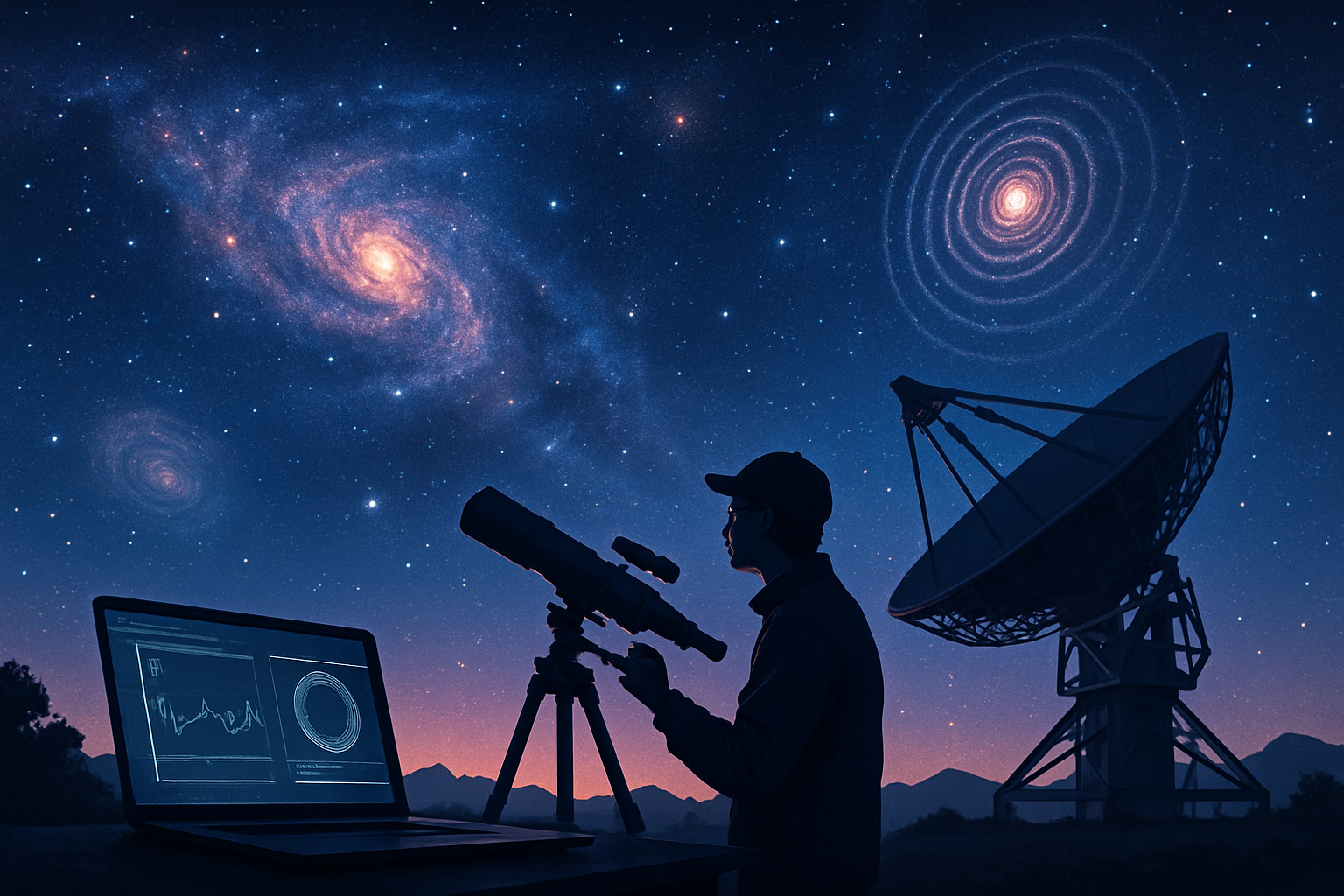
Cosmic curiosity is the engine driving breakthroughs in astronomy, from uncharted galaxies to enigmatic fast radio bursts. By blending cutting-edge technology with citizen science and sustainable practices, today's explorers are charting new paths across the universe.
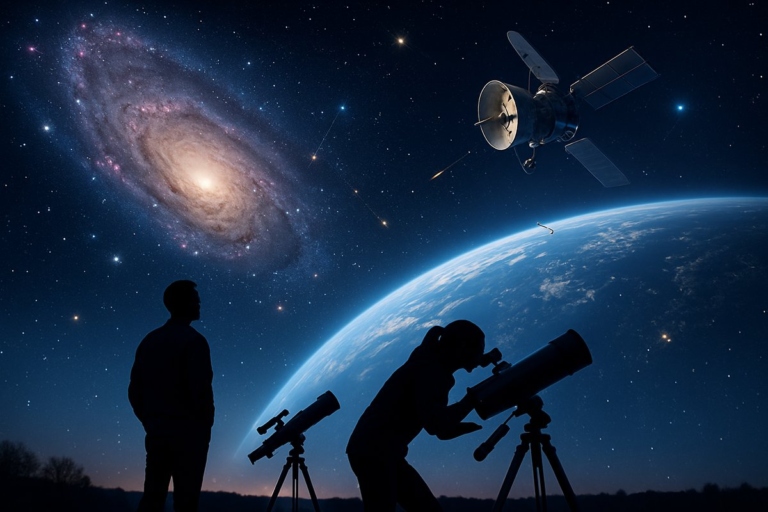
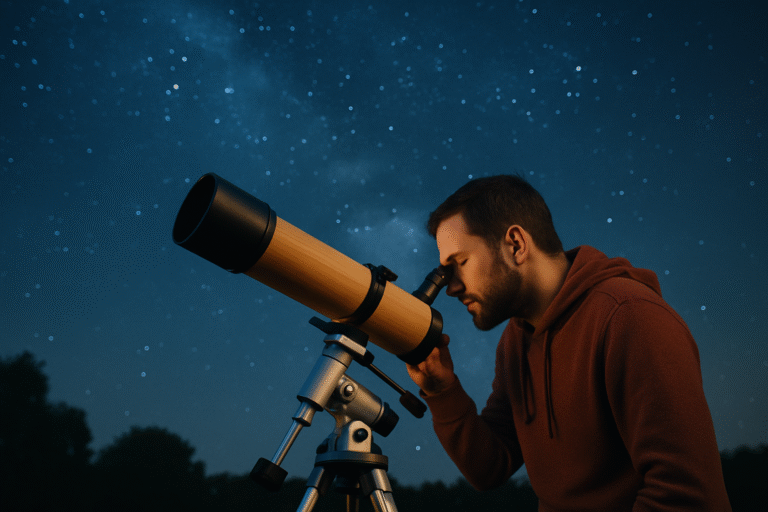
For centuries, the human impulse to peer into the night sky has propelled us beyond daily concerns toward questions of origin, evolution, and destiny. That longing, often called cosmic curiosity, binds disparate cultures across time. In the 21st century, this drive has converged with breakthroughs in optics, computing power, and data analysis to transform stargazers into modern explorers. The distinction between amateur and professional is blurring as new instruments and open-access platforms democratize discovery. Indeed, a backyard telescope paired with machine-learning algorithms can reveal faint stellar companions or spot transient phenomena in ways unimaginable just decades ago. Recent accounts of backyard astronomers alerting professionals to emergent supernovae underscore the power of collective curiosity. Meanwhile, satellites equipped with advanced infrared sensors drift beyond Earth’s atmosphere, collecting terabytes of raw data daily. This convergence of passion and technology heralds a renaissance of discovery, offering fresh insights into cosmic collisions, star birth, and the mysterious emptiness between galaxies.
Over the past few years, cosmic curiosity has yielded headline-grabbing revelations: the first image of a supermassive black hole’s shadow, spectral signatures of water vapor in exoplanet atmospheres, and puzzling fast radio bursts (FRBs) emerging from distant galaxies. Each milestone was fueled by researchers asking bold questions and devising novel methods to test them. The interplay between ground-based observatories and spaceborne platforms has been especially fruitful. Millimeter-wave arrays detect molecular clouds cradling nascent stars, while next-generation infrared telescopes peer into the heart of dust-shrouded regions. Together, these efforts are mapping the universe’s structure on scales ranging from planetary systems to the cosmic web, reshaping our understanding of dark matter, dark energy, and the conditions for life beyond Earth.
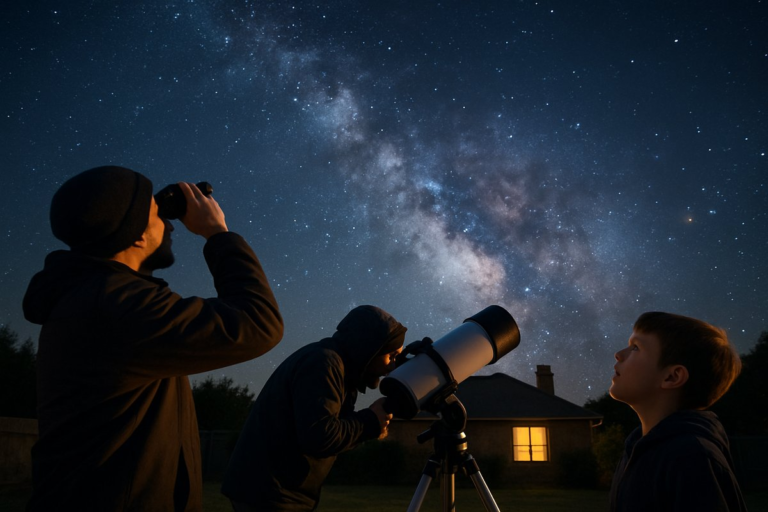
Citizen science initiatives have emerged as vital conduits for translating cosmic curiosity into measurable results. Projects like Galaxy Zoo enlist volunteers to classify galaxy morphologies using simple online interfaces, while affordable radio astronomy kits let enthusiasts capture real signals from pulsars and quasars. By crowdsourcing pattern-recognition tasks, researchers process millions of images and terabytes of data in months instead of years. These collaborative efforts also nurture a new generation of scientifically literate participants. Schools and community groups organize “star parties” where attendees learn to calibrate tracking mounts, interpret light curves, and analyze spectra. This hands-on approach cultivates both critical thinking and emotional intelligence, as teams grapple with uncertainty and celebrate unexpected discoveries together.
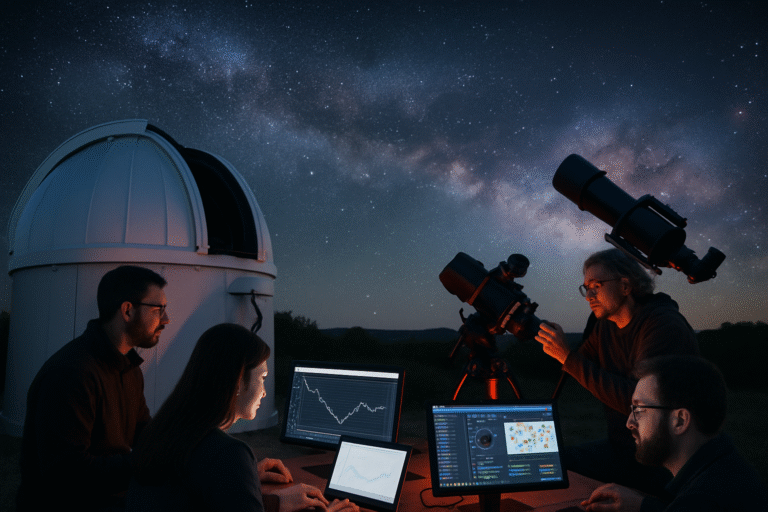
Advances in affordable hardware and open-source software have further accelerated the pace of cosmic inquiry. Off-the-shelf CMOS sensors, once confined to consumer electronics, now serve as imaging arrays for small telescopes, capturing deep-sky targets with remarkable sensitivity. Portable spectrographs allow hobbyists to resolve emission lines in nebulae or measure radial velocities in binary stars. On the software side, machine-learning frameworks streamline anomaly detection, flagging unusual transits or stellar flares within massive datasets. Cloud-based platforms offer virtual observatories accessible from any web browser, enabling users to overlay multi-wavelength imagery and run custom scripts without specialized local hardware. Together, these innovations lower the barrier to entry and empower anyone with an internet connection to participate in frontier research.
Educational institutions and nonprofits are leveraging cosmic curiosity to inspire learners of all ages. After-school clubs guide students through constructing simple spectrometers from cardboard and diffraction gratings, revealing the chemical fingerprints of celestial objects. Hackathons challenge teams to write code that models orbital mechanics or predicts meteor-shower peaks, blending astrophysics with software engineering. Virtual reality simulations transport participants to the surface of Mars or through the swirling arms of a spiral galaxy, fostering empathy and a sense of wonder. By integrating sustainability themes-such as designing low-impact observatories or analyzing light-pollution trends-these programs cultivate ethical reasoning alongside technical skills. The result is a cohort of nimble thinkers prepared to tackle challenges both cosmic and terrestrial.
Looking ahead, a suite of upcoming missions promises to deepen our grasp of the cosmos. Wide-field surveys from newly commissioned observatories will scan the sky nightly, cataloging transient phenomena such as kilonovae and tidal disruption events. CubeSat constellations aim to demonstrate swarms of miniature telescopes that can flexibly reconfigure in orbit, offering unprecedented temporal coverage of dynamic processes. Advanced gravitational-wave detectors will probe signals from neutron star collisions, complementing electromagnetic observations for a holistic multi-messenger approach. Even terrestrial applications-like laser-guide-star adaptive optics on large telescopes-are poised to push ground-based imaging to resolutions rivaling spaceborne platforms. These endeavors underscore a shared commitment to curiosity-driven research as the foundation of scientific progress.
With the explosion of observational data comes an imperative to address ethics, privacy, and environmental impact. Data privacy concerns may arise when citizen scientists contribute observational logs, geolocation tags, or personal biometrics during field campaigns. Adopting transparent data policies and anonymization protocols ensures participant trust. Environmental footprints of large observatories-encompassing light pollution, energy consumption, and habitat disruption-also demand sustainable solutions. Solar-powered remote monitoring stations, low-reflection coatings on domes, and night-sky-friendly LED fixtures exemplify measures that balance scientific goals with ecological stewardship. By embedding these values at the outset, the cosmic exploration community honors its responsibility to protect both Earth and the broader cosmic context it seeks to understand.
Beyond technical achievements, cosmic curiosity yields profound emotional and societal benefits. Gazing at the night sky can cultivate humility, empathy, and a sense of shared heritage. Public stargazing events foster community bonds across diverse backgrounds, uniting participants in moments of collective wonder. The metaphors drawn from cosmic phenomena-cycles of birth and death in stars, vast interconnected structures, and the resilience of life-offer fresh lenses for addressing human challenges such as social fragmentation and climate change. Art, literature, and music inspired by astronomical concepts spark cross-disciplinary dialogue, enriching both cultural and scientific landscapes. In this way, exploring the cosmos becomes a catalyst for reflection on our place in the grand tapestry of existence.
Yet challenges persist. Unequal access to high-quality equipment, digital divides, and language barriers can limit participation in global discovery efforts. Recognizing these obstacles, organizations are forging partnerships to distribute low-cost telescopes and sensors to underserved communities, paired with multilingual training resources. Open-source hardware initiatives publish 3D-printable designs for mounts and spectrographs, while software documentation is translated and peer-reviewed for accuracy. Peer mentoring networks match novices with experienced observers who guide remote observing sessions. This democratization of cosmic inquiry not only diversifies the pool of contributors but also enriches the scientific process with new perspectives and local knowledge.
Consider the story of a coastal high-school robotics team that repurposed their engineering skills to build an ocean-to-sky observatory. They launched a weather-resistant payload carrying a low-power camera and spectrometer on a tethered balloon, collecting spectra of passing satellites and atmospheric phenomena. By correlating their data with open gravitational models, they published a brief report in a peer-reviewed journal, becoming the youngest collective authors in its history. Their success hinged on curiosity-asking what lay beyond standard robotics challenges-and on leveraging community resources, from recycled materials to online forums. Their journey underscores how imagination, when coupled with modular tools and open collaboration, can propel unexpected breakthroughs.
The modular design philosophy permeating cosmic exploration mirrors broader shifts in technology and culture. Just as software packages can be mixed and matched to create custom workflows, hardware modules-from focusers to filters to detectors-can be swapped to address diverse observational goals. This ethos enables rapid prototyping of instruments and fosters iterative improvements based on real-world feedback. Universities, startups, and hobbyist groups contribute interchangeable components licensed under free-culture agreements. The result is a bustling ecosystem where ideas evolve organically, and barriers to experimentation are steadily dismantled. In this environment, cosmic curiosity becomes a self-sustaining engine, endlessly regenerating fresh lines of inquiry and innovation.
As humanity stands on the cusp of an era defined by unprecedented connectivity and technological prowess, cosmic curiosity remains our guiding star. By weaving together professional expertise, citizen science, ethical commitments, and modular ingenuity, we craft a future where anyone can lift their gaze skyward and claim a stake in discovery. Whether through a backyard telescope, a community observatory, or a virtual data portal, each question posed is a step toward fathoming the cosmos and, in turn, ourselves. The next great leap may stem from a curious mind in an unexpected place-ready to ask what no one else has yet dared to imagine. In that spirit, the universe awaits.