Location
Mount Vernon, WA 98274
Location
Mount Vernon, WA 98274

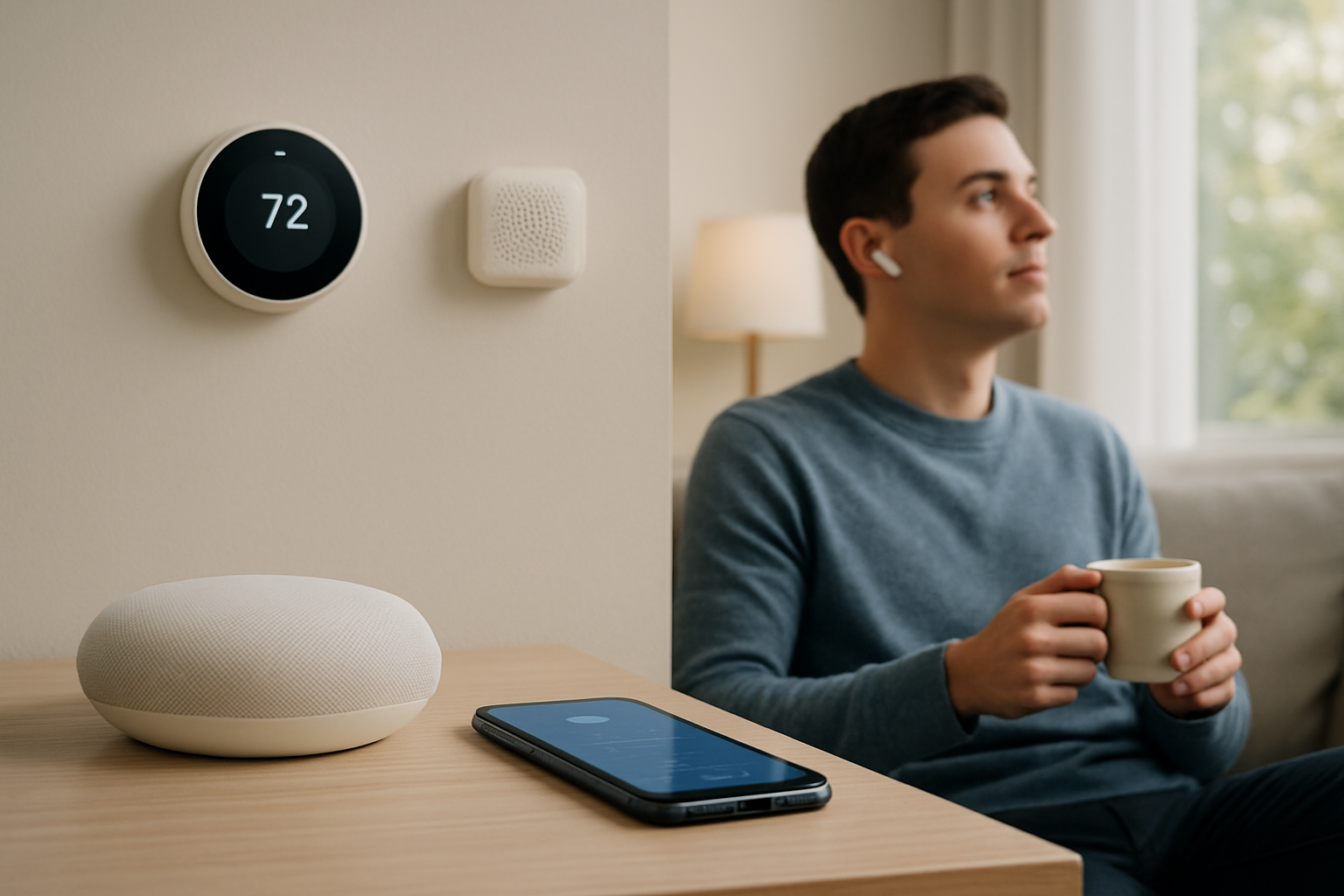
A new wave of devices is taking cues from user routines and environmental conditions to operate seamlessly in the background. From context-aware sensors to edge AI earbuds, ambient intelligence is quietly redefining how we interact with everyday technology.
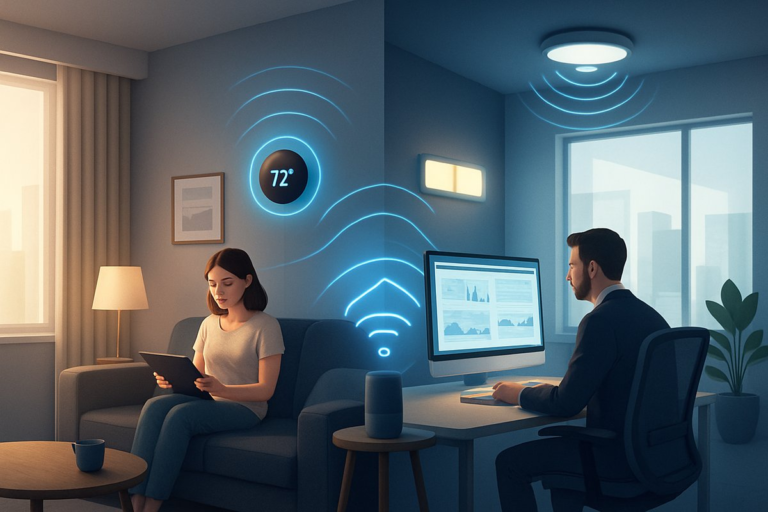
In recent years, a silent revolution has been unfolding across everyday gadgets, driven by systems that sense context and act autonomously. Beyond flashy screens and high refresh rates, this new wave focuses on ambient intelligence: devices that quietly gather data about movement, lighting, temperature and user behavior, then adapt in real time. Instead of demanding constant attention, they learn routines and preferences, reducing friction in daily tasks. From morning coffee to evening relaxation, ambient gadgets are weaving themselves into the fabric of homes, offices and public spaces, promising a more intuitive layer of technology that fades into the background while working tirelessly.
Context-aware sensors are at the heart of ambient intelligence. Miniature radar modules embedded in thermostats no longer rely solely on motion detection; they can track breathing and sleeping patterns to optimize climate control without waking a resting occupant. Wearables featuring low-power accelerometers and magnetometers collaborate with environmental sensors to detect posture and activity level, automatically adjusting fitness reminders or air purifier settings. Lighting systems equipped with spectral and proximity sensors fine-tune brightness and color temperature throughout the day, mimicking natural sunlight cycles to support circadian rhythms and boost wellbeing.
Smart home hubs have evolved beyond simple voice commands. New platforms support low-power wireless protocols like Thread and Matter, allowing gadgets from different brands to interoperate without a cloud middleman. Occupancy sensors can trigger air purifiers and humidifiers when indoor air quality dips, while smart blinds raise or lower automatically according to ambient noise levels outside. By networking appliances in a mesh topology, homeowners achieve higher reliability and faster local responses, ensuring that personalized scenes-such as bedtime lighting and temperature presets-activate instantaneously when you step into the room.
Edge AI is redefining the role of wireless earbuds and headphones. On-device processors analyze ambient sound in real time, blending noise cancellation, speech enhancement and spatial audio without depending on a smartphone connection. These earbuds can learn your hearing profile and adjust frequency curves dynamically, reducing ear fatigue during long video calls or workout sessions. With battery life extended through ultra-efficient silicon, they can adapt to noisy subway rides one minute and quiet library study sessions the next, all without tapping into remote servers.
Health tracking gadgets are moving from discrete fitness bands to integrated, multi-sensor ecosystems. Wearable patches offer continuous hydration monitoring by measuring skin impedance and sweat composition, alerting you when electrolyte levels drop. Posture sensors clipped to the collarbone communicate with desk lamps or mobile apps to suggest micro-breaks and stretching routines, helping mitigate back and neck strain. Meanwhile, smart rings embed optical heart rate sensors and peripheral oximeters in slim casings, enabling round-the-clock cardio check-ins without compromising on style or comfort.
Sustainability is no longer an afterthought in gadget design. Solar-powered Bluetooth trackers adhere to backpacks and bicycles, harvesting daylight to run extended range location services. Many brands are experimenting with recycled plastics and upcycled metals, while modular battery packs replace disposable cells in flashlights and camping lanterns. Packaging is shifting towards compostable paper sleeves and water-soluble labels, reducing single-use waste. This circular approach is gaining traction as consumers demand ethical sourcing and manufacturers seek to close the loop on electronics end-of-life management.
Digital wellness tools are also undergoing a shift. Rather than nagging you with intrusive notifications, new devices use ambient cues to encourage healthier habits. Desk lamps gradually brighten at intervals that align with movement data, suggesting short walking breaks without explicitly prompting via a pop-up. Blue light filters adapt dynamically based on your screen time and ambient illumination, recalibrating color temperature to preserve nighttime melatonin production. Wearables can even detect eye strain by monitoring blink rate and suggest micro-exercises through subtle vibration patterns.
Modularity has become a major trend in consumer electronics. Instead of replacing entire products, consumers can swap camera lenses, sensor modules and battery cores when new technology emerges. Some entry-level smartphones ship with expansion rails that support thermal imagers, environmental gas sensors or additional storage drives. This plug-and-play approach reduces e-waste and lets enthusiasts customize a single device for multiple roles-photography, remote sensing or extended battery life-without buying dozens of specialized gadgets.
Interoperability standards like Matter are breaking down walled gardens in smart homes. By adopting a common language and secure authentication framework, devices from competing manufacturers can join the same network seamlessly. A smart speaker from one company can control lighting and smart locks built by another, while maintaining end-to-end encryption. This cohesion extends to software too, with unified dashboards that let users configure scenes, automation rules and energy-use reports in a single interface rather than juggling multiple siloed apps.
AI-driven personalization is pushing customization to new levels. True-tone display modules perform spectral analysis of your workspace and adjust screen color temperature not just by time of day but by the ambient color palette. Smart headphones use 3D ear scanning through a companion app to recommend and print custom-fit eartips that seal perfectly against the ear canal, enhancing noise isolation. Sleep trackers map micro-awakenings by analyzing chest motion and breathing rhythms, then play subtle audio sequences to promote longer cycles of deep rest.
The kitchen remains fertile ground for ambient intelligence. Countertop appliances learn your cooking patterns and suggest recipes when fresh produce supply is detected by built-in freshness sensors. Toasters analyze slice thickness and moisture content via infrared sensors, adjusting toast time and temperature for crispy results without burning. Refrigerators with integrated weight sensors can track pantry inventory, sending low-stock alerts and suggesting meal ideas based on available ingredients, all while maintaining data privacy through local processing.
As remote work becomes a permanent fixture for many, office gadgets are optimizing productivity and ergonomics. Height-adjustable desks now include scheduling features that automatically transition between sitting and standing intervals according to calendar data. Smart office chairs detect pressure distribution and adjust lumbar support in real time, reducing fatigue during long video conferences. Ambient microphones distinguish between the primary speaker and background noises, enabling seamless audio capture for transcription services without compromising confidentiality through cloud uploads.
Portable projection systems are breaking free of bulky set-ups. Pico laser projectors equipped with integrated Wi-Fi and battery packs can mirror a phone screen onto any flat surface, delivering 1080p visuals for impromptu presentations or movie nights. Some models double as power banks, recharging your devices while projecting slides. With onboard speakers and Bluetooth audio out, they deliver a complete micro-cinema experience that fits into a jacket pocket.
Connectivity has also matured. 5G CPE routers bring fiber-like download speeds to rural and suburban homes, while mesh Wi-Fi systems featuring multi-gigabit backhaul guarantee consistent coverage across multi-story houses. Integrated VPN support and hardware firewalls are now standard, giving small business owners and remote workers enterprise-grade security without complex configurations. Quality of Service settings prioritize latency-sensitive applications like video calls and cloud gaming at the router level, eliminating lag spikes.
Voice assistants are going private by default. On-device automatic speech recognition handles routine commands for music playback, timers and lighting control without transmitting audio to the cloud. When more complex tasks arise, only encrypted data snippets are sent to remote servers, minimizing personal data exposure. Coupled with user-controlled data deletion tools, these advancements restore trust in voice-driven interactions and ensure that ambient listening remains transparent and under user control.
Hardware-level security is catching up with rapid feature deployment. Secure Enclave chips in wearables and smart displays handle biometric authentication, cryptographic operations and secure boot processes independently of the main processor. This separation prevents malicious apps from snooping on sensitive credentials or injecting firmware-level exploits. As more gadgets join the internet of things, hardware security modules are becoming a best practice to safeguard personal data against emerging cyber threats.
The silent revolution of ambient intelligence is more than a collection of clever gadgets; it represents a paradigm shift in how technology integrates with our lives. By focusing on local processing, interoperability and sustainable design, the latest wave of devices enhances daily routines without demanding constant attention or compromising privacy. As these systems continue to mature, we can expect a future where technology complements human behavior so seamlessly that it becomes almost invisible-a true background collaborator in our quest for comfort, efficiency and wellbeing.