Location
Mount Vernon, WA 98274
Location
Mount Vernon, WA 98274

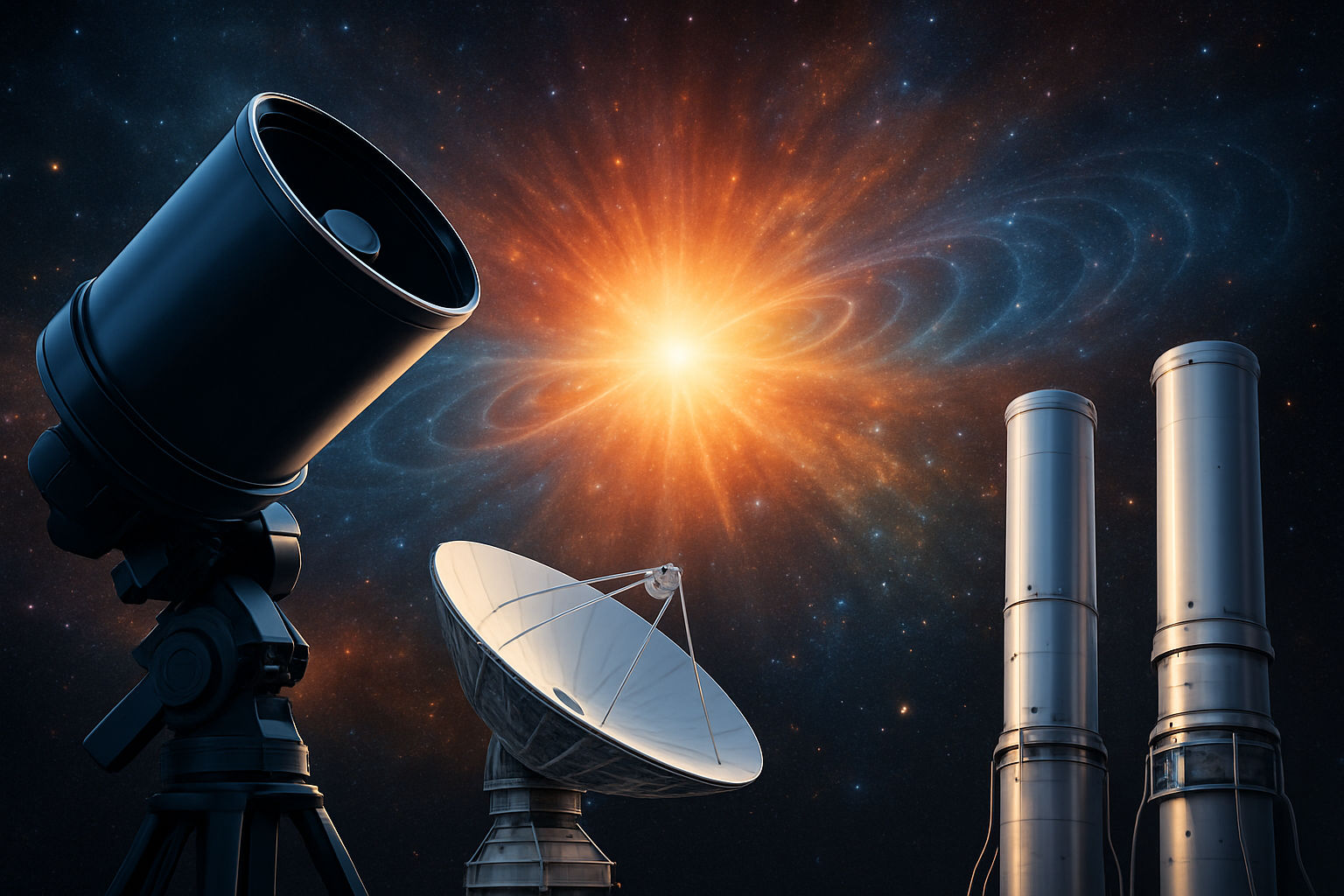
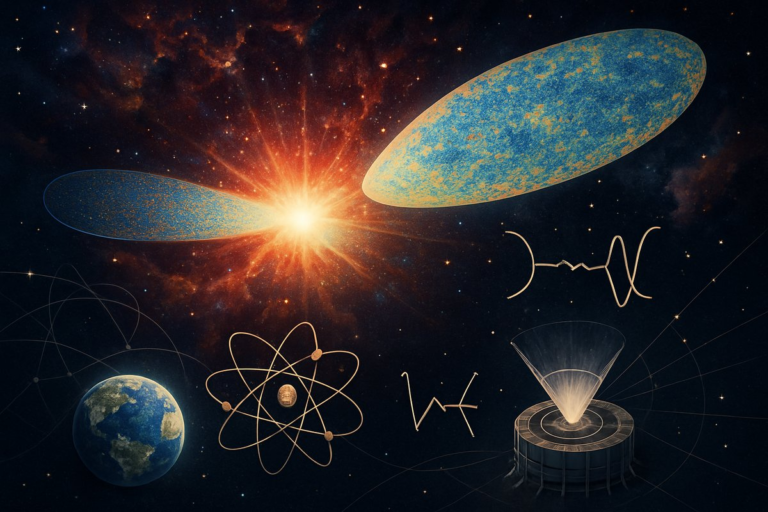
A convergence of advanced telescopes, gravitational wave observatories, and particle detectors is shedding unprecedented light on the universe's earliest seconds. As astronomers and physicists collaborate across disciplines, new data are refining our picture of how space, time, and the building blocks of matter emerged from primordial conditions.
From the faint glow of the cosmic microwave background to ripples in spacetime itself, modern science is piecing together a dynamic portrait of the universe’s birth. Once a realm of speculative theory and incomplete observations, the field now thrives on data streams captured by orbiting observatories, ground-based arrays, and subterranean detectors. These converging lines of evidence are transforming our understanding of how the cosmos transitioned from a seething, ultra-dense state into the vast expanse we inhabit today.
High-resolution maps of the cosmic microwave background (CMB) have become a cornerstone for testing early-universe models. Built on measurements of temperature and polarization fluctuations at microkelvin precision, these maps trace minute imprints left by sound waves and density patterns that rippled through the primordial plasma. Updated analyses incorporate polarization data obtained by balloon-borne experiments and terrestrial telescopes in Antarctica, refining estimates of key parameters such as the curvature of space and the energy scale of inflation. By comparing these empirical patterns to theoretical predictions, researchers are narrowing down the plausible mechanisms that powered the universe’s initial burst of accelerated expansion.
Gravitational wave astronomy has joined this investigative toolkit with discoveries that reach back to the first fractions of a second post-creation. Detectors like LIGO, Virgo, and new underground facilities have started to probe stochastic backgrounds-persistent gravitational ripples created by a turbulent early epoch. These signals could reveal phase transitions in fundamental fields or even traces of cosmic strings, hypothetical defects in spacetime predicted by certain unified theories. While direct detection of primordial gravitational waves remains a frontier challenge, upcoming upgrades promise sensitivities capable of testing scenarios inaccessible through electromagnetic observations alone.
Meanwhile, deep-field imaging from cutting-edge space telescopes is charting the emergence of the first galaxies and stars. By capturing light redshifted into the infrared, astronomers are peering back into epochs when the universe was under a billion years old. These observations are helping to resolve discrepancies between theoretical predictions and counts of faint galaxies. By constructing a statistical census of early star formation, researchers can infer how quickly matter coalesced under gravity and how the first sources of radiation reionized the intergalactic medium.
Particle physics experiments are playing a critical role in this cosmic detective story. High-energy accelerators have refined our understanding of how elementary forces behaved under extreme conditions similar to those a microsecond after the big bang. Neutrino observatories buried deep in ice and rock are listening for rare interactions that carry information about the universe’s infancy. Anomalies in neutrino flux or unexpected oscillation patterns could hint at new physics, such as additional neutrino species or interactions beyond the Standard Model, both of which would have influenced early expansion and element formation.
Theoretical work on cosmic inflation continues to evolve, with researchers exploring variants that involve multiple interacting fields or non-standard kinetic properties. These models can produce distinctive signatures-such as specific patterns of non-Gaussianity in the CMB-that upcoming surveys may detect. Some proposals even suggest a brief ekpyrotic phase or a pre-inflationary scenario where our universe emerges from a higher-dimensional collision. While these ideas remain speculative, they drive experimentalists to push the boundaries of measurement precision and motivate new observational campaigns.
Alternative frameworks like bouncing cosmologies and string gas models offer radically different narratives for the universe’s origin. Instead of a singular beginning, a cyclic universe might undergo endless contractions and expansions, smoothing out inhomogeneities during each bounce. String gas cosmology posits that fundamental strings dominated the earliest era, imprinting characteristic patterns in large-scale structure. Though these scenarios confront significant theoretical challenges-such as avoiding instabilities and matching known cosmic relics-they serve as fertile ground for fresh mathematical and computational insights.
Dark matter and dark energy remain central mysteries in any origin story. While dark matter’s gravitational pull seeded the formation of galaxies, its particle identity is still unknown. Experiments continue to search for weakly interacting massive particles, axions, and other exotic candidates. On the opposite side, dark energy’s influence on cosmic acceleration raises questions about vacuum energy and the ultimate fate of spacetime. Researchers are investigating whether these dark components might have played a more dynamic role in the universe’s first instants, perhaps driving or modifying the inflationary phase.
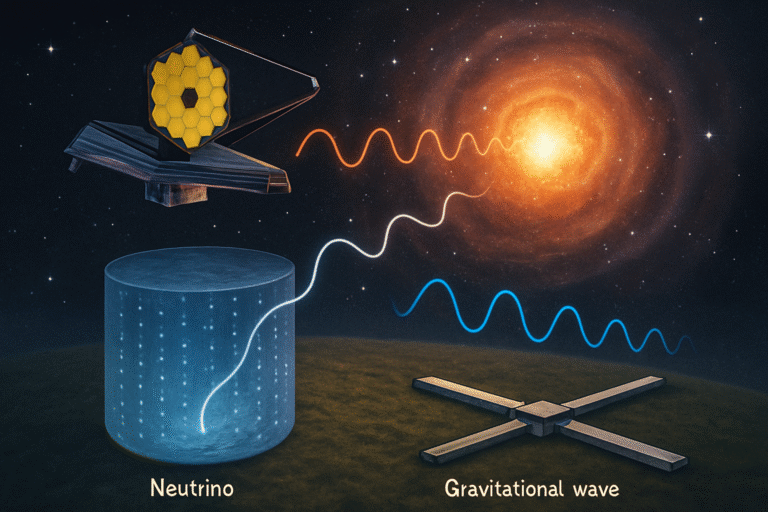
A hallmark of this era is the synergy of multi-messenger astronomy. Observations that combine electromagnetic light, gravitational waves, neutrinos, and cosmic rays offer cross-checks and richer context. For instance, mergers of neutron stars produce both gravitational wave chirps and heavy nucleosynthesis in kilonovae, revealing clues about element formation. Though these events occur long after the big bang, the methods developed to triangulate signals and model extreme physics are now being applied to search for primordial sources, such as relic black holes or exotic field decays.
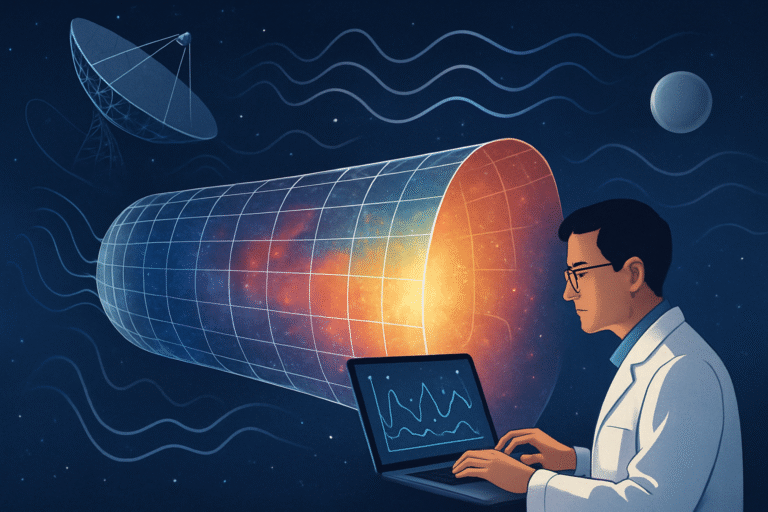
Large-scale computational simulations are indispensable for bridging theory and observation. By modeling gravity, hydrodynamics, radiation transport, and particle interactions across billions of light-years, scientists recreate mock universes to test hypotheses. Machine learning techniques accelerate these efforts, spotting subtle patterns and accelerating parameter scans. Cloud-based platforms and shared data repositories promote transparency and collaboration, ensuring that new models are scrutinized and refined with community input.
Amateur astronomers and citizen scientists are contributing in surprising ways. Public data from sky surveys are open to enthusiasts who sift through images to identify transient events or map gravitational lensing. These grassroots efforts have led to polymerase-chain reactions of discovery-from spotting supernova candidates to flagging unusual galactic alignments that might signal exotic physics. By fostering inclusive, curiosity-driven participation, the cosmology community leverages diverse perspectives and skill sets.
Sustainability is emerging as a core value in large-scale science, including cosmology. Observatories are adopting renewable energy sources, seeking to minimize ecological footprints in remote mountaintop and polar locations. Computing centers are optimizing algorithms for energy efficiency, and data archives are migrating to carbon-neutral facilities. These efforts underscore a commitment to preserving Earth even as we explore the origin of everything.
Emotional intelligence in science communication has become increasingly important, ensuring that cutting-edge discoveries are conveyed with clarity and respect for diverse worldviews. Outreach initiatives now emphasize narrative and context, inviting audiences to explore both the technical details and the human curiosity that drives research. By acknowledging uncertainty and celebrating incremental progress, communicators foster public trust and inspire the next generation of explorers.
The quest to understand our cosmic roots intertwines with age-old philosophical questions: Where did we come from? Are we alone? What governs the ultimate destiny of reality? Each observational breakthrough and theoretical advance refines our place within a vast tapestry woven by natural laws and chance. The scientific enterprise thrives on the tension between what is known and what remains tantalizingly out of reach.
Many open questions endure: What triggered inflation, if anything? How did matter and antimatter achieve their present imbalance? Do primordial magnetic fields exist, and what role did they play? As new instruments come online and collaborations expand across continents, these enduring puzzles draw us deeper into the cosmos and closer to fundamental truths.
Turning data into understanding will demand patience, creativity, and collaboration. Future space-based missions will map gravitational waves at lower frequencies. Next-generation terrestrial telescopes will chart faint galaxies at unprecedented depths. New particle experiments will push sensitivity frontiers. Together, these efforts promise a progressively richer narrative of the universe’s first heartbeat.
In this age of exploration, each discovery is not an endpoint but a doorway to fresh mysteries. The story of the universe’s origins is unfolding chapter by chapter, woven by the combined efforts of theorists, observers, and curious minds everywhere. As we peer ever deeper into the cosmic past, we reaffirm a profound truth: to understand the universe’s beginning is to illuminate humanity’s own journey in the grand adventure of existence.