Location
Mount Vernon, WA 98274
Location
Mount Vernon, WA 98274

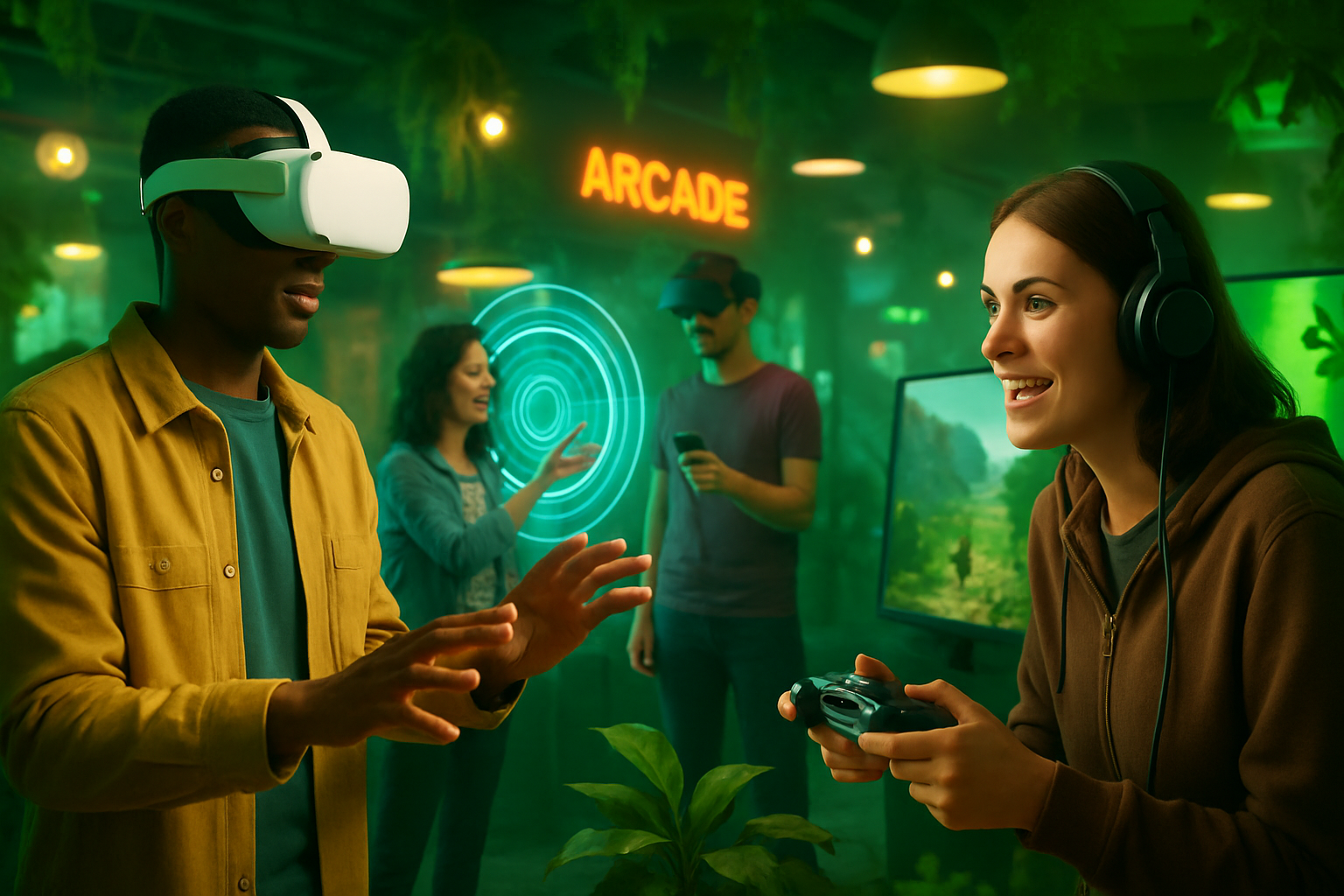
A wave of hybrid gaming experiences is transforming the way we interact with digital worlds and each other. From pop-up mixed-reality arcades to haptic-driven narratives and eco-friendly production, the entertainment landscape is shifting toward immersive play that blends emotion, sustainability, and community.
In today’s entertainment landscape, the boundaries between physical space and digital realms are dissolving. Gamers are no longer content to sit tethered to a console or keyboard; they crave experiences that engage all their senses and invite them to inhabit virtual worlds in real time. This shift has given rise to a new generation of experiential gaming, where immersion goes beyond high-fidelity graphics to include touch, movement, social connection, and even a sense of purpose. Players step through thresholds that once existed only in science-fiction, traversing pop-up mixed-reality arcades, donning haptic-feedback suits, and collaborating in real-world spaces augmented by digital overlays.
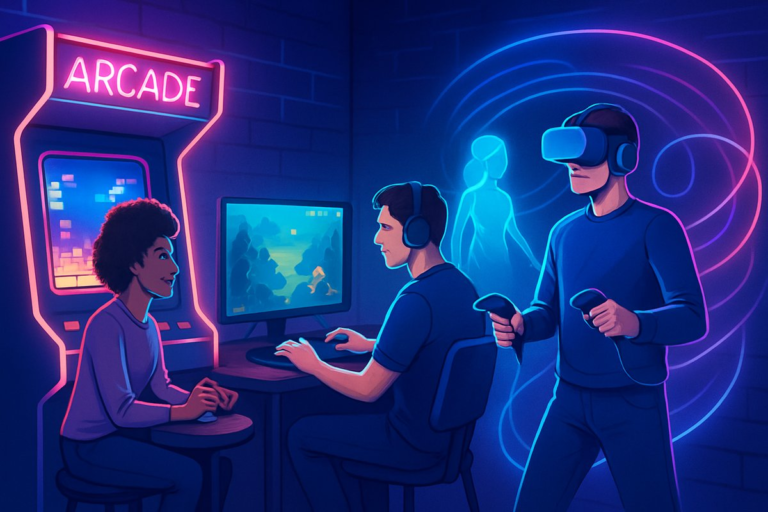
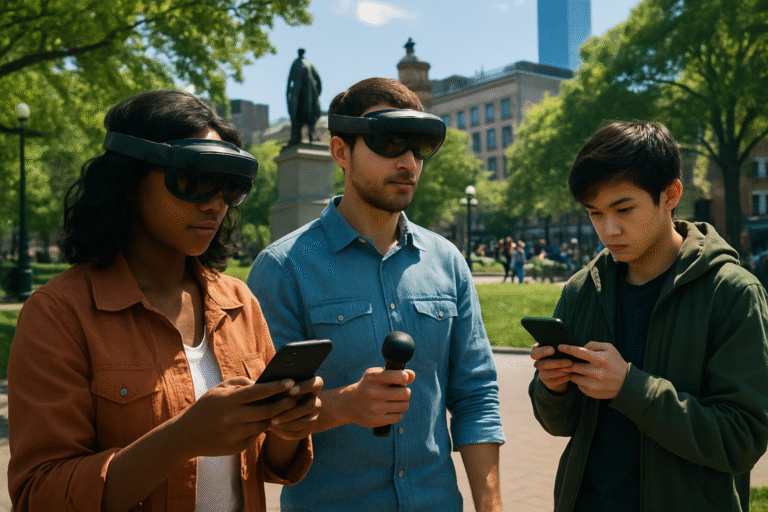
Behind these innovations is a growing appetite for play that feels alive and human. Developers are partnering with location-based entertainment venues to launch short-run installations that blend escape-room puzzles, augmented reality projections, and interactive storytelling. One recent showcase let participants decode clues projected onto city streets through a smartphone app, guiding them from one site to the next in a live narrative that unfolded across an urban environment. At the same time, dedicated mixed-reality arcades invite groups to tackle cooperative challenges in large motion-capture volumes, where virtual obstacles collide with real walls and floors. This synergy of tech and venue design turns familiar city centers and empty warehouses into ever-shifting playgrounds.
Equally vital to the emerging scene is the evolution of haptic feedback. Rather than relying solely on vibration motors in handheld controllers, today’s leading developers are harnessing full-body suits, gloves, and vest attachments equipped with dozens of actuators. These devices simulate the flutter of wings, the sting of virtual rain, or the recoil of a futuristic weapon. Coupled with biometric sensors-tracking heart rate, skin conductance, and muscle tension-game engines can tailor experiences in real time, adjusting pacing and narrative tone based on a player’s emotional state. Characters in these worlds learn to respond with more nuanced emotional intelligence: pausing if a player’s heart rate spikes, offering calming dialogue if stress levels climb, or ramping up intensity if detection drops below a threshold.
This drive toward emotional immersion extends beyond solo play. Hybrid live events are blending e-sports, concerts, and augmented choreography to create synchronized spectacles that blend virtual and real audiences. Attendees at a recent music festival activated AR filters on their phones to reveal hidden visual effects dancing above the stage. Elsewhere, fans in an arena engaged in live-tournament modes between performances, voting on game modifiers that influenced the next song’s remix. Such dynamic interplay underscores how community agency is becoming integral to entertainment, giving spectators the power to shape the experience as much as performers and developers.
Sustainability has emerged as a core consideration in bringing these ambitious projects to life. The gaming industry’s environmental footprint-driven by high-performance servers, disposable packaging, and frequent hardware upgrades-has drawn scrutiny from both players and developers. In response, several studios have shifted to digital-only distribution for episodic releases, reducing plastic waste and shipping emissions. Hardware manufacturers are experimenting with recycled plastics and modular designs that extend console lifespans and facilitate easy repairs. Major cloud-gaming providers are optimizing data centers with energy-efficient cooling and renewable power sources. Some publishers now offer voluntary carbon-offset options at checkout, giving players the choice to fund reforestation or clean-energy projects as part of their digital purchase.
Accessibility and inclusion are also driving design philosophies in experiential gaming. Adaptive controllers, customizable input schemes, and voice-activated navigation are becoming standard features in new releases. Games now integrate real-time captioning and AI-driven translation to connect global audiences seamlessly. On the visual side, color-blind modes and posture-adaptive interfaces ensure that each participant can tailor the experience to their needs, whether they’re exploring a dense VR environment or coordinating tactics in a mixed-reality escape room. By building with diverse abilities in mind, creators unlock richer social dynamics and broaden the potential player base.
Cloud gaming technology continues to underpin many of these innovations by offloading rendering and physics calculations to remote servers. Edge-compute nodes positioned closer to urban centers are reducing latency to levels once thought impossible for high-speed action. This infrastructure makes it possible to stream rich virtual environments to mobile devices, lightweight headsets, and even AR glasses. As 5G and Wi-Fi 6 networks expand, more players can tap into server-driven worlds without investing in expensive local hardware. The promise of instant access and device-agnostic compatibility is redefining how people discover, sample, and commit to new interactive entertainment.
User-generated content remains a potent force in shaping these ecosystems. Platforms that support web-based editors and collaborative mod tools invite entire communities to craft custom missions, narrative arcs, and physical-world overlays. A handful of breakout hits have sprung from fan-made expansions, prompting publishers to incorporate popular mods into official releases. This democratization of creation fosters a continuous feedback loop: developers release modular asset packs, communities remix them into fresh experiences, and standout designs find their way back into larger production pipelines.
The traditional boundaries of business models are also shifting. Subscription services bundle vast libraries of games with experiential perks-such as free trial passes to local mixed-reality venues or exclusive cosmetic drops unlocked at live events. Season passes evolve into live-service frameworks where content drops are informed by real-time player feedback, social trends, and even environmental factors like weather or local holidays. Transparent microtransaction systems, regulated by industry guidelines and parental-control settings, seek to balance monetization with player trust, ensuring that experiences remain equitable and enjoyable for all skill levels.
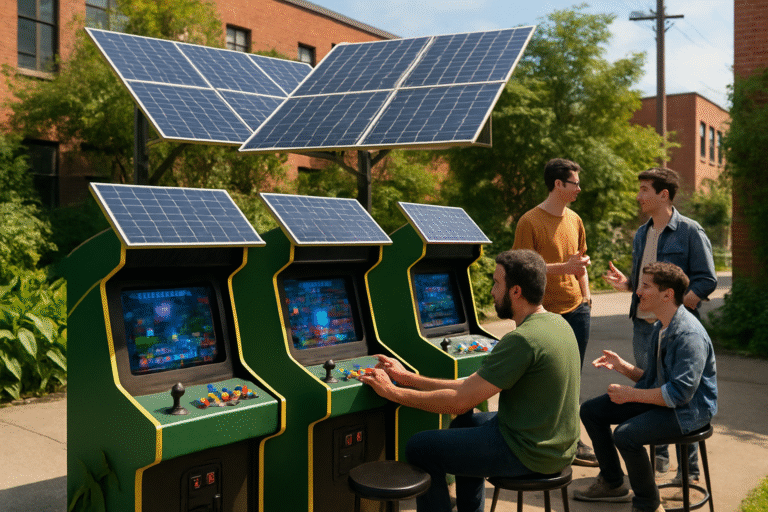
Amid this wave of innovation, there’s a parallel resurgence of nostalgia. Vintage arcades are making comebacks on city corners, retro-style cabinets now powered by cloud-streaming backends. Virtual reality software emulates the tactile charm of old-school pinball tables, while digital board games with handcrafted assets recall living-room gatherings of decades past. These nostalgic experiences often incorporate modern social overlays-leaderboards, live spectating, and social livestream integration-to connect generational audiences and preserve the social rituals that defined early gaming culture.
Beyond pure entertainment, experiential gaming is being applied to wellness and education. Therapeutic VR programs guide users through meditative landscapes calibrated to induce calm, using design principles borrowed from art therapy. Cognitive training apps embed puzzles in narrative contexts that encourage focus and problem-solving. Physical fitness regimes are gamified with real-time coaching avatars that respond to biometric feedback, making workouts feel like interactive missions rather than chores. By merging meaningful narratives with purposeful mechanics, developers are redefining play as a medium for growth and well-being.
As these trends converge, one thing becomes clear: the future of play isn’t confined to screens or devices, but woven into the fabric of everyday life. Whether through ephemeral pop-ups that vanish after a weekend, global communities crafting shared worlds, or sustainable production practices laying groundwork for responsible growth, experiential gaming is charting a course toward deeper emotional connection and broader accessibility. For players and creators alike, the invitation is simple: step beyond pixels and polygons, embrace curiosity, and find new ways to explore what it means to play in an interconnected world.