Location
Mount Vernon, WA 98274
Location
Mount Vernon, WA 98274


Across cities and towns, grassroots networks are transforming how people share skills, resources, and support in the face of economic uncertainty and climate stress. By pooling tools, trading services, and organizing mutual aid, diverse communities are forging stronger social bonds and practical resilience.
In the aftermath of recent global disruptions-from supply-chain challenges to extreme weather events-people are rediscovering the power of local connection. Spurred by a desire to reduce waste, cut costs, and strengthen social ties, neighborhoods from coast to coast have launched hyper-local initiatives that share everything from lawn mowers to language lessons. These projects, often led by volunteers and powered by simple online platforms, prove that resilient communities can emerge without waiting for top-down solutions.
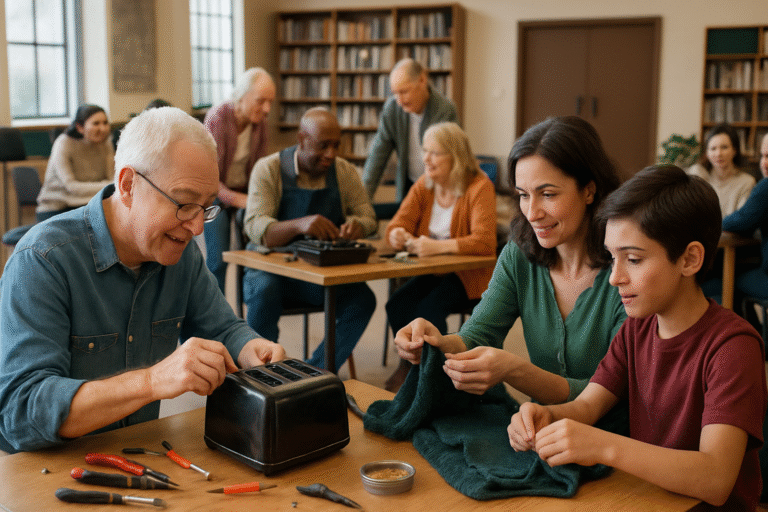
One of the fastest-growing models is the community tool library, where members borrow drills, saws, and gardening equipment instead of each household purchasing its own. In a mid-sized Rust Belt city, a warehouse repurposed by neighbors now houses more than 500 tools and hosts weekly repair workshops. Membership fees remain low, often on a sliding scale, ensuring access for all income levels. Local entrepreneurs donate surplus hardware while retirees lead hands-on sessions, teaching newcomers how to fix leaky faucets and build planter boxes. The library reports that each adult member saves an average of $200 per year while preventing dozens of tools from collecting dust in basements.
Time banks and skill-sharing networks have also gained traction in urban and rural areas alike. Participants earn hours when they tutor a child, translate a document, or offer bicycle maintenance. Those credits can then be redeemed for language lessons, home cooking classes, or elder visits. In one coastal town, a digital platform coordinates more than 300 volunteers. Trades range from computer troubleshooting to watercolor painting. Credit balances display in a shared ledger, but organizers emphasize that genuine trust and social capital remain the most valuable currencies.
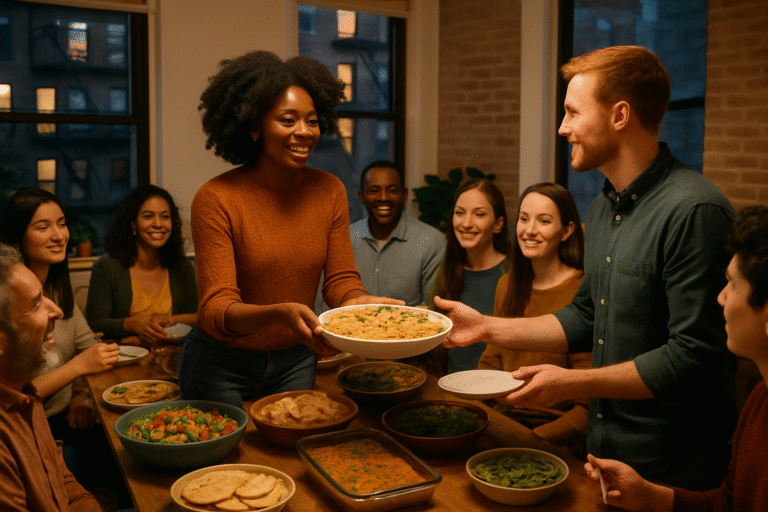
Perhaps the most visible outgrowth of this trend is the rise of mutual aid pods. At its simplest, a mutual aid group connects households in need-perhaps those facing food insecurity or recovering from an emergency-with neighbors who can deliver meals, share excess produce, or drive someone to a medical appointment. Early in the pandemic, thousands of such groups emerged on social media. Many have since formalized their efforts into rotating duty rosters, bulk-food orders, and central drop-off points. Coordinators say volunteers feel more connected, with one study noting a 25 percent increase in reported life satisfaction among frequent contributors.
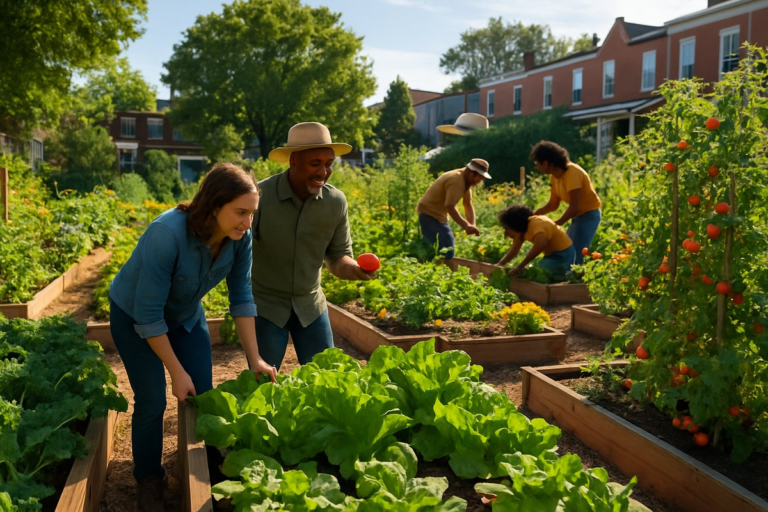
Urban gardens, too, have become both nourishment hubs and social incubators. Vacant lots are transformed into shared green spaces where newcomers learn to grow tomatoes, herbs, and pollinator-friendly flowers alongside seasoned gardeners. These plots supply local pantries as well as tables at neighborhood potlucks. Community harvest festivals further cement ties, blending skill demonstrations with storytelling and live music. Climate-smart techniques-rainwater catchment systems, composting toilets, drought-resilient plantings-often feature in collaborative design workshops, inviting hands-on exploration of low-impact living.
Digital infrastructure underpins many of these grassroots ventures. Simple group-messaging apps handle sign-ups and event reminders. Free or low-cost websites host searchable catalogs for tools and services. In one text-based mutual aid circle, an automated bot tags new requests by urgency, ensuring that critical needs-medical rides and prescription pickups-move to the front of the queue. Privacy protocols built into these platforms help protect personal information while still providing enough context for volunteers to coordinate effectively.
Despite their promise, grassroots networks face hurdles. Securing a permanent space for tool libraries or gardens often requires navigating zoning rules and municipal red tape. Volunteer burnout can strain nascent groups, especially when demand spikes after disasters. Liability concerns over lending sharp tools or transporting neighbors have prompted many organizers to draft simple waivers and offer basic liability insurance. Some groups form nonprofit cooperatives to gain access to grants and tax-exempt status, though tightening regulations can make compliance a challenge.
Innovators, however, are responding with creative solutions. Microgrants from local foundations cover rent for pop-up repair cafés. Crowdfunding campaigns offset the cost of safety gear and protective eyewear. Emerging community currencies-digital tokens that reward eco-friendly acts like bike commuting or neighborhood cleanups-reinforce sustainable behaviors. QR codes on shared equipment check users in and out while painting real-time analytics of usage patterns, helping coordinators decide which items to expand or retire.
Municipal support is slowly catching up. City councils in several places have approved pilot programs that grant priority access to publicly owned storefronts for community resource hubs. Libraries are partnering with local nonprofits to host seed exchanges and mini tool libraries in branches. Neighborhood planning committees increasingly allocate small parcels of vacant land for edible landscapes and stormwater management projects. These public-private partnerships highlight a growing recognition that resilient cities depend on empowered citizens as much as on central planners.
For communities looking to launch their own initiative, the first step is to map local assets and needs. A simple survey-online or on paper-can reveal who owns tools, who has car seats stashed in the garage, and who can teach home repairs. Identifying gaps is equally crucial: Does the neighborhood lack a meeting spot? Are families seeking fresh produce or after-school mentorship? With this baseline, organizers can recruit volunteers, choose appropriate software for scheduling, set transparent guidelines for borrowing and liability, and host a soft launch event to test workflows.
Consider the case of Westbrook Community Repair Hub, which began as a monthly “bring-and-fix” pop-up in a church parking lot. Organizers quickly recognized the demand for regular tool access, so they partnered with a local redevelopment agency to secure an affordable storefront. Within six months, they had drafted bylaws, elected a volunteer board, and processed more than 1,200 tool loans. Feedback surveys showed a 40 percent uptick in neighbor-to-neighbor introductions and a 15 percent drop in material-purchase waste among frequent borrowers. By the end of its second year, the repair hub integrated an educational series on sustainable design, inviting architects and climate scientists to lead hands-on labs using reclaimed materials.
These grassroots networks are more than a stopgap against inflation or a hobby for the civically minded. They represent an evolution in how people conceive of community. Rather than isolated units competing for scarce resources, neighborhoods become dynamic ecosystems where skills, trust, and creativity flow freely. Participants report reduced feelings of isolation and greater optimism about the future, even amid economic and environmental uncertainty.
Looking ahead, experts predict deeper integration between digital and physical layers of these networks. Imagine augmented-reality maps that overlay tool-library inventories onto neighborhood streets or blockchain-backed time banks that verify skills across multiple regions. Cross-neighborhood alliances could link rural farmers and urban chefs, matching surplus produce with culinary innovators. As climate impacts intensify, these decentralized networks may prove vital for rapid response and recovery.
Ultimately, crafting resilient communities is a shared endeavor. It begins with modest acts-lending a wrench, offering a translation, planting a seedling-and grows into a tapestry of collaboration that weaves together diverse talents and experiences. Each participant learns that community is not a passive backdrop but an active creation, built moment by moment. By embracing grassroots networks today, neighborhoods everywhere can become stronger, more inclusive, and better prepared for the challenges of tomorrow.