Location
Mount Vernon, WA 98274
Location
Mount Vernon, WA 98274


Global markets are adapting to shifting monetary policies, supply chain realignments, and the growing emphasis on sustainable finance. This article explores the evolving economic landscape and offers practical guidance for crafting resilient investment and policy approaches.
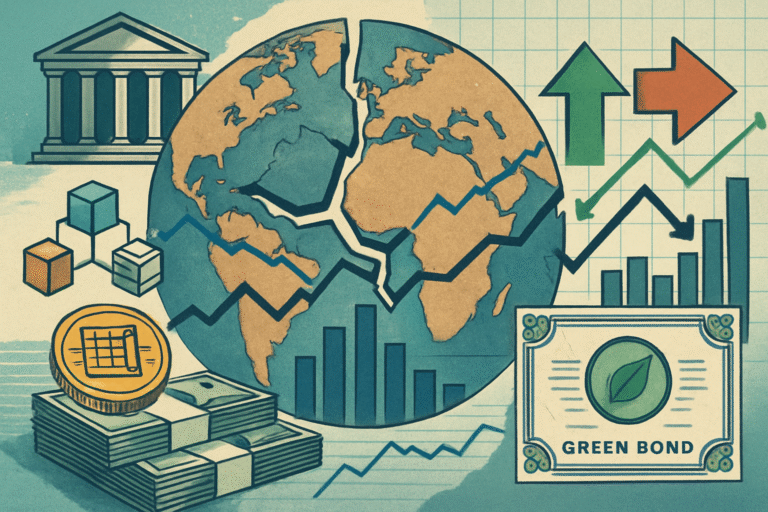
After years marked by rapid stimulus measures and unprecedented supply chain disruptions, the global economy is entering a phase of recalibration. Central banks have begun to signal a gradual withdrawal of the extraordinary support deployed during past crises, while commodity prices and logistics bottlenecks show signs of stabilizing. In parallel, sustainable finance initiatives are moving from niche to mainstream, reshaping the priorities of institutional and individual investors alike. This article analyses these converging dynamics and lays out actionable strategies for portfolio resilience and policy effectiveness.
Monetary Policy Divergence
Major monetary authorities in advanced economies have shifted from emergency rate cuts to cautious tightening or sustained high rates. While headline inflation has eased from its peak, underlying price pressures persist in services and rent. Bond markets are pricing in a moderate pace of rate increases over the next cycle, with 10-year sovereign yields hovering in the mid-3 percent range in many jurisdictions. At the same time, emerging markets face a delicate balancing act: controlling inflation while preserving growth amid capital flow volatility. Investors must navigate this divergence by diversifying across interest-rate environments and hedging currency exposure.
Key considerations:
• Duration positioning: Shorter-duration bonds can help reduce sensitivity to rising rates, but may underperform if policy shifts ease sooner than expected. A barbell approach-mixing short and intermediate maturities-can offer flexibility.
• Currency hedges: When investing in higher-yielding markets, layered hedges or multi-currency allocations can dampen exchange-rate swings.
• Central bank communications: Monitoring policy statements for shifts in forward guidance helps anticipate rate pivots and adjust duration accordingly.
Supply Chains and Commodity Dynamics
Supply chain congestion, once the dominant headline concern, has broadly receded since its worst phases. Shipping indices and warehouse utilization rates show normalized levels, yet pockets of friction remain in specialized components such as semiconductors and electrical wiring harnesses. Commodity markets, meanwhile, have found a new equilibrium: energy prices are more responsive to seasonal demand and geopolitics, while agricultural products reflect both climate variability and evolving dietary trends.
Actionable insights:
• Industry mapping: Conduct periodic reviews of portfolio holdings to identify direct or indirect exposure to vulnerable supply-chain links.
• Real-assets allocation: Adding selective exposure to commodity producers or infrastructure assets can provide inflation hedges, though careful attention to geopolitical risk is crucial.
• Dynamic rebalancing: Trigger rules tied to logistics-cost indices or raw-material benchmarks can automate portfolio adjustments when disruptions flare up.
The Rise of Sustainable Finance
Environmental, social, and governance (ESG) criteria have progressed from a sideline consideration to a core component of capital allocation. Net-zero targets and climate stress tests are influencing corporate strategies, while green bond issuance has surged into the hundreds of billions annually. Regulatory frameworks in multiple regions now require standardized disclosures on carbon footprints, breach response plans, and human-rights policies.
Integrating sustainability:
• ESG integration: Rather than screening out sectors, many investors are adopting a tilt-and-engage approach-allocating modest overweights to companies demonstrating clear decarbonization roadmaps and active stakeholder dialogue.
• Sustainability-linked instruments: Bonds and loans tied to predefined ESG milestones can align financing costs with measurable progress.
• Data quality: As ESG reporting standards converge, investors should favor data providers that blend public filings with alternative satellite or sensor-based measurements to reduce greenwashing risks.
Digital Innovation in Finance
The financial industry’s digitization accelerated during the pandemic and continues apace. Central bank digital currencies (CBDCs) are under exploration in multiple jurisdictions, potentially reshaping cross-border payments and financial inclusion. Meanwhile, decentralized finance (DeFi) platforms offer programmable contracts and peer-to-peer lending, though regulatory clarity remains in flux.
Practical steps:
• Technology due diligence: Investors allocating to fintech or blockchain ventures should assess both code audits and regulatory pathways to ensure sustainable adoption.
• CBDC readiness: Corporations and payment providers can experiment now with pilot integrations and cross-border remittance proofs of concept.
• Cybersecurity: As digital footprints expand, robust controls and incident-response plans become imperative to safeguard assets and customer trust.
Managing Macro and Geopolitical Risks
Rising geopolitical tensions and election cycles inject additional layers of uncertainty. Governments may resort to trade barriers or targeted sanctions, affecting supply chains and market sentiment. Central banks in some regions hold large equity or commodity reserves, potentially deploying unconventional interventions if stability is threatened.
Risk-management toolkit:
• Scenario analysis: Quantitative models should incorporate macro shocks-such as a sudden energy embargo or an abrupt policy shift-followed by stress testing portfolio resilience.
• Alternative assets: Allocations to real estate, infrastructure, or hedge funds with relative-value strategies can diversify away from market-beta volatility.
• Policy monitoring: A calendar of key election dates, fiscal announcements, and trade negotiations helps anticipate regime changes and policy drag.
Building Resilient Portfolios
Given the intertwined challenges of policy normalization, geopolitical frictions, and climate imperatives, a multi-layered portfolio approach is essential.
1. Core diversifiers: Government bonds, high-grade investment-grade credit, and cash equivalents anchor stability in turbulent phases.
2. Real assets and inflation hedges: Real estate investment trusts (REITs), infrastructure funds, and commodity-linked securities can offset erosion from moderate inflation.
3. Global equities with growth tilt: Companies in health care, technology, and renewable energy sectors may benefit from long-term secular trends, albeit with higher near-term volatility.
4. Thematic and alternative sleeve: Allocations to private markets, impact funds, or volatility-managed strategies add optionality and downside defense.
5. Tactical overlay: A disciplined use of derivatives-such as options for downside protection or currency forwards for FX hedging-can enhance risk-adjusted returns.
Regulatory and Tax Considerations
Tax regimes are in flux, with some governments mulling wealth levies and digital-services taxes. Financial regulators are intensifying scrutiny of algorithmic trading, lending platforms, and cross-border fund flows. Investors and corporate treasurers must stay agile.
Checklist:
• Portfolio location: Evaluate the relative benefits of onshore, offshore, and tax-efficient umbrellas for different asset classes.
• Compliance frameworks: Strengthen anti-money-laundering (AML) and know-your-customer (KYC) processes to align with tightened global standards.
• Reporting infrastructure: Adopt modular software systems that streamline regulatory filings and tax calculations across jurisdictions.
Actionable Tips for Individual Investors
• Emergency reserves: Maintain a cash buffer covering six months of essential expenses, particularly if interest rates remain elevated.
• Automated budgeting: Use mobile apps with forecasting engines to track income, allocate savings, and align spending with long-term goals.
• Cost conscious: Opt for low-fee index funds or exchange-traded funds (ETFs) for core equity and bond exposures, reserving active strategies for specialized themes.
• Continuing education: Follow reputable financial research platforms and simulation tools to refine market timing and sector rotation tactics.
In Summary
The current economic chapter is defined by transition-out of crisis-mode stimulus into a terrain of more measured policy, tempered growth, and accelerated sustainability mandates. Investors who embrace diversified portfolios, leverage digital innovations, and integrate ESG considerations stand to navigate volatility more adeptly. Policymakers, meanwhile, must balance inflation control with equitable growth and green transitions. By synthesizing macro insights with practical portfolio design, market participants can chart a course through complexity toward resilient outcomes.